Quick Summary: If you want a no-drama way to try scuba fast, warm, and beginner-friendly, this is your brutally practical intro to scuba Hurghada: what happens step-by-step, what it feels like (including that first regulator breath), what can go wrong (wind, crowds, upsells), and how to book a Discovery Scuba Diving day that’s actually safe and worth your money. If you’re comparing a boat day vs shore session for a PADI discovery dive Red Sea experience—or you’re ready to learn to dive Egypt from zero—use this as your booking checklist.
| Feature | Discovery Scuba Diving (Boat Day) | Discovery Scuba Diving (Shore/House Reef) | Snorkeling Day Trip | Open Water Course (3–4 days typical) |
|---|---|---|---|---|
| Typical Price Range (Hurghada) | Mid-range (often packaged with lunch + 2 stops) | Often slightly cheaper or similar | Usually cheapest | Highest upfront cost |
| Vibe | “Adventure day” + social boat | Calm, focused, less “tour” | Relaxed, family-friendly | Serious learning |
| Crowd Level | Medium–High (depends on boat size) | Low–Medium | High | Low–Medium |
| Best For | People who want the full Red Sea day experience | Nervous beginners who want fewer variables | Non-swimmers who just want a sea day | Travelers committed to learn to dive properly |
If you’ve been scrolling dive videos at 1 a.m. and thinking “Could I actually do that?”, Hurghada is one of the easiest places on Earth to find out—fast, warm, and built for beginners. This is your practical, no-fluff intro to scuba Hurghada: what happens minute-by-minute, what it feels like, what you’ll pay, and how to avoid getting rinsed. Whether you’re comparing a boat day versus a shore session for a PADI discovery dive Red Sea style experience, or you’re ready to learn to dive Egypt with zero experience, this is the playbook that turns curiosity into your first real underwater moment.
Why This Guide Exists
Hurghada is “logistics-first diving.” That’s good for beginners: short transfers, lots of instructors, and reefs that don’t demand hero-level confidence on day one. It’s also a high-volume machine, which is where people get burned: rushed briefings, crowded platforms, and “surprise” add-ons. Use this guide to filter operators the same way you’d filter a hotel: proof, process, and clear inclusions—not vibes. If you want to sanity-check who’s solid before you book, start with Routri’s best diving centers in Hurghada guide and browse Hurghada tours and activities to compare what’s actually included.
The Landscape & Context
What makes scuba education here unusually accessible is the combo of clear water, shallow plateaus, and generally gentle entries at many nearby sites—less stress when you’re learning regulator breathing and equalization. But the same system that makes it easy can also make it sloppy: too many snorkelers + too many intro divers can mean waiting around in gear and getting less instructor time per person. Want a “sea day” option that stays on the surface (and can be a safer confidence-builder if you’re unsure)? Compare against Orange Bay snorkeling by yacht or other Hurghada water activities before deciding.
Wind is the other reality beginners underestimate. In windier months, afternoons can get choppy, and mask skills at the surface feel harder when the boat is bouncing. In exposed periods, Red Sea coastal afternoons can commonly hit 15–25 knots in spring/summer patterns. If you get seasick, you don’t want your first dive memory to be nausea and diesel fumes.
Part 2: The Options (Comparison)
Here’s the clean comparison so you don’t waste time (or money). If your goal is transactional—book something now that gets you underwater safely—Discovery Scuba Diving is the direct route. If you’re nervous, snorkeling is a lower-commitment sea day. If you want the actual qualification, Open Water is the real path (but it costs more time and admin). For more context on picking between experiences, Routri’s Red Sea diving guide and night diving guide help you understand what changes as you level up.
Option A: Discovery Scuba Diving (DSD) — the best transactional choice for beginners
This is the classic PADI discovery dive Red Sea style product: a supervised first dive designed to be safe, controlled, and confidence-building.
- Pros: You can go underwater today with no experience; you typically get a skills intro (regulator breathing, mask clearing basics, equalizing); depth stays conservative—first dives are typically to 12 meters / 40 feet or shallower in entry-level experiences; it’s a clean “try-before-you-buy.”
- Cons: Not a certification; quality varies hard by operator and group size; boat days can become a seasickness problem if you pick the wrong season/time.
Option B: Snorkeling day trip — great if you’re nervous, but limited learning
- Pros: Cheapest ocean day out; no breathing equipment learning curve; still sees coral and fish in shallow areas.
- Cons: You stay at the surface; you don’t learn buoyancy, breathing control, or underwater comfort; if your goal is scuba, it can feel like a near miss.
Option C: PADI Open Water Course — real qualification, but bigger time + money commitment
- Pros: The real pathway to “I am a diver”; structured training (theory + confined water + open water dives).
- Cons: Multi-day schedule; medical questionnaire + study + discipline; not ideal for a 1–2 day window.
Part 3: The Logistics (How to Do It Right)
Getting this right as a beginner is mostly about reducing variables: control your transfers, pick a time-of-day that dodges wind, and don’t let “cash-only surprises” appear after you’re committed. If you want predictable pickup and less taxi negotiation, Routri’s Hurghada airport transfer service is the clean option, and the Red Sea transport guide gives realistic transfer timing across resort zones.
Getting to Hurghada (HRG) and to your dive center
Hurghada Airport (HRG) → Central Hurghada hotels (Sheraton Road / Sakkala area): fixed-price private transfer (sedan) commonly listed around €15 per car for “Central Hotels.”
HRG → El Gouna / Sahl Hasheesh / Makadi Bay / Soma Bay: typical fixed sedan rates advertised: El Gouna €25, Sahl Hasheesh €25, Makadi Bay €25, Soma Bay €30.
Reality check: street taxis may quote in EGP and may start low then “revise” when you arrive. If you’re new to the Red Sea region, fixed transfer pricing reduces friction.
Typical travel times (practical expectations)
- Airport → central Hurghada: often 15–25 minutes depending on traffic.
- Airport → El Gouna: roughly 35–45 minutes.
- Airport → Sahl Hasheesh / Makadi: often 25–40 minutes.
(Main variables: security checkpoints + hotel zone access gates.)
Best time for an intro to scuba Hurghada (weather, sea, wind reality)
Hurghada is diveable year-round, but comfort swings hard. Sea temperature averages: coldest around February ~22°C, warmest around August ~28.6°C. Wind: spring/summer afternoons can be reliably breezy; exposed zones commonly see 15–25 knot afternoon winds in windier seasons (especially May–October patterns). If you want a planning layer beyond “it’s always good,” use Routri’s Red Sea snorkeling and diving season planner and Red Sea travel seasons and deals guide.
| Season (Hurghada) | Sea Temp (Typical) | Wind Reality (Practical for boats) | Comfort Notes | Best DSD Style |
|---|---|---|---|---|
| Winter (Dec–Feb) | ~22–24°C (Feb coldest ~22°C) | Can be breezy; chop possible | Air can feel cool after diving; bring layers | Shore DSD or calm-day boat |
| Spring (Mar–Apr) | ~22–25°C (warming) | Wind variable; gusty days happen | Great visibility; water still feels “fresh” | Either, but prioritize sheltered sites |
| Summer (May–Aug) | ~26–29°C (Aug warmest ~28.6°C) | Afternoons often 15–25 knots in exposed areas | Warm water; heat on boat can be intense | Morning boat DSD or shaded boats |
| Autumn (Sep–Nov) | ~25–28°C (still warm) | Can still be windy, but often very diveable | Often the comfort sweet spot | Boat DSD shines |
Insider Tips & Scams to Avoid
Hurghada can be amazing for first-timers. It can also feel like you’re being processed through a tourist conveyor belt. The scam pattern is simple: the price looks low until you’re already on the boat, then add-ons start stacking. Before you book any water day, skim Routri’s Hurghada boat tours guide to understand crowd and timing traps, and if you’re comparing surface-only options, check Hurghada snorkeling planning tips.
The usual traps (and your move)
- The “cheap DSD” that becomes expensive on the boat: marine park fee, “equipment upgrades” (computer, thicker wetsuit), photo/video pressure, transfer surcharges outside core zones. Your move: demand an all-in price in writing (a message screenshot is enough). If they won’t itemize, assume it’s not all-in.
- Group size bait-and-switch: you book “small group,” you show up and it’s 10 people rotating through one instructor team. Your move: ask for instructor-to-student ratio limits; if anxiety is high, pay for private.
- Rushed briefing: a proper first dive includes calm repetition: equalization, mask comfort, what to do if you panic. Your move: if they rush or dismiss questions, walk.
- “Captain says no” cancellations: sometimes legit wind/chop; sometimes oversell logistics. Your move: accept safety cancellations, then lock reschedule/refund terms clearly.
- Payment traps: full prepayment with slippery refunds, or “cash only” plus inflated on-arrival totals. Your move: confirm booking policy; bring exact change where possible.
Safety & Ethics
Discovery Scuba Diving should feel controlled, not chaotic. Non-negotiables: direct supervision by a qualified pro, clear depth control (entry dives are typically 12m/40ft or shallower in beginner contexts), real equipment checks (air, releases, weights, inflator), and zero pressure to go deeper. For the reef: no touching coral, no standing on coral, no chasing turtles/dolphins, and watch weighting—overweighted beginners crash into reefs. If you want a deeper read on marine areas and rules, Routri’s Red Sea marine parks guide helps you understand why some fees exist and what “protected area” actually means.
Booking & Logistics
If you’re ready to convert this into an actual booking, pick the format first (shore vs boat), then lock the inclusions. For a beginner-focused boat-day Discovery Scuba Diving option, Routri lists Intro Diving for Beginners: Discover the Red Sea (two dives at different sites + lunch onboard; note the listing mentions an “extra hidden charge may apply,” so treat that as a prompt to confirm all fees in writing before you show up). If you want a different scuba-style day focused on a specific underwater attraction, there’s also Hurghada: Red Sea Military Museum scuba dive. To reduce taxi friction on arrival day, pair your dive plan with the Hurghada airport transfer option.
Step 1: Decide your format (boat vs shore)
- Shore/house reef: better if you’re nervous, get seasick, or want fewer variables.
- Boat day: better if you want the full day vibe and don’t mind a busier platform.
Step 2: Confirm inclusions (get it in writing)
- Total price per person
- Equipment included (mask/fins/wetsuit/BCD/regulator/weights)
- Number of dives (some sell “DSD” but deliver one short dive)
- Transfers included or not
- Extra fees (marine park, photos)
Step 3: Why “Pay cash on arrival” can protect you
For first-timers, paying cash on arrival can be a consumer-protection move: you can inspect the real operation (boat condition, gear, briefing quality), and if reality doesn’t match the promise (ratio, inclusions), you can walk without chasing refunds. Do it safely: agree exact amount and currency before, show up early, and bring small bills so you’re not forced into a bad exchange rate.
What your first dive will feel like (so you know what’s normal)
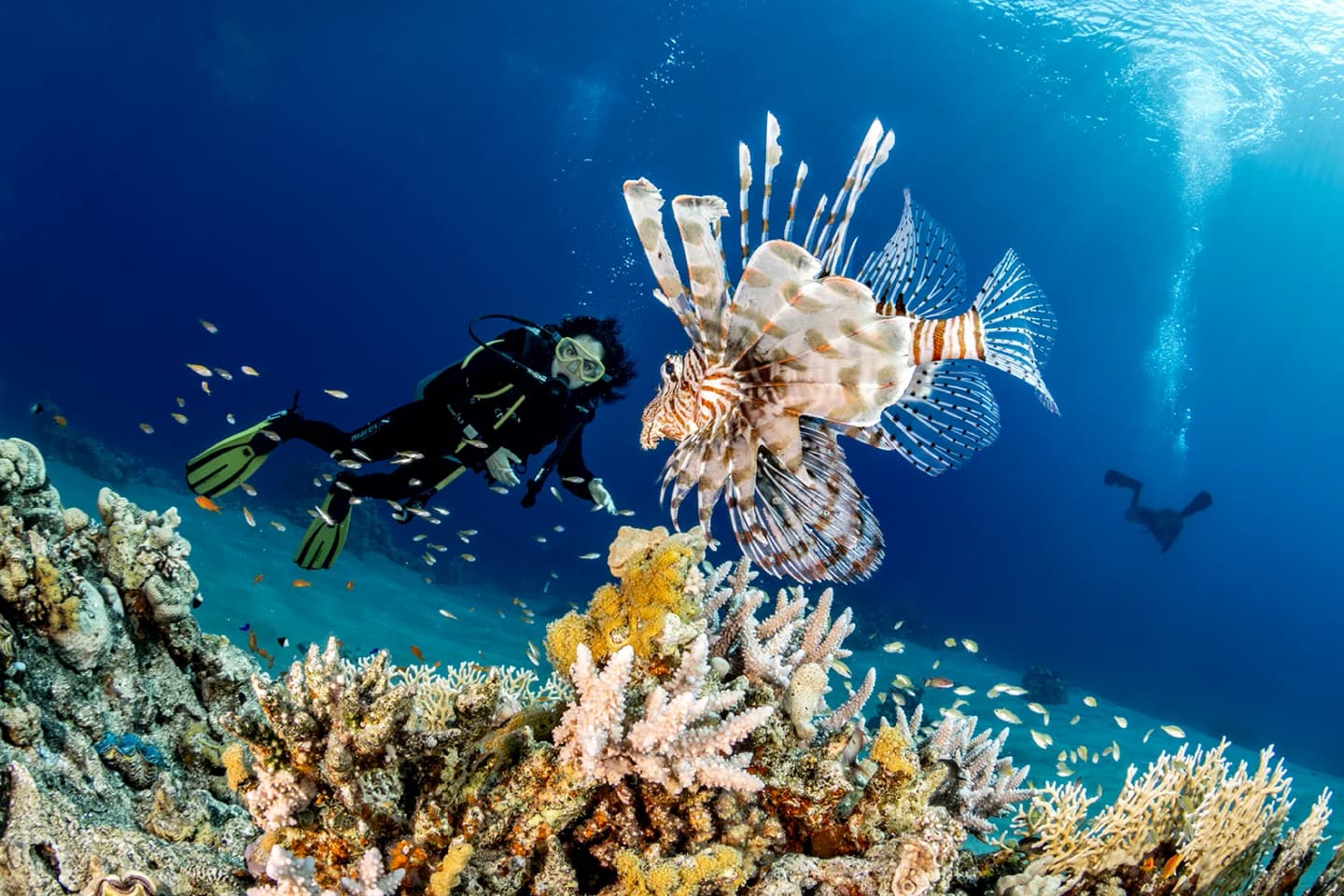
You’ll remember three sensations more than anything: (1) the first breath—regulator feels slightly mechanical, then you exhale and watch silver beads race upward; (2) the soundscape—above water it’s wind/engine/people, below water it’s muffled quiet, your breathing rhythm, and reef clicks; (3) buoyancy—first you feel heavy, then a little air in the BCD and you hover. The best first dive is slow: small fin strokes, relaxed hands, long exhales.
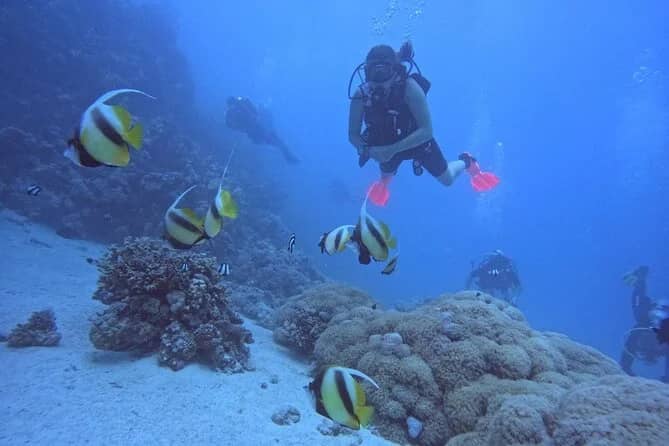
On beginner-friendly sites you’ll likely see parrotfish crunching coral, butterflyfish in pairs, blue-spotted stingrays on sand patches, and coral gardens with tan/purple tones and neon edges where the light hits.
A solid DSD flow usually looks like: gear fitting → safety briefing → shallow skill practice (breathing, regulator recovery, mask clear basics) → slow descent (equalize early/often) → short tour with frequent OK checks → slow ascent + surface inflate + debrief. Depth stays conservative: typically 12m/40ft or shallower in entry contexts.
FAQs
These are the common beginner questions that actually affect your decision (and your comfort) on the day.
Is this guide an intro to scuba Hurghada for total beginners?
Yes. Hurghada is beginner-friendly because you can start with a supervised Discovery Scuba Diving session, often on shallow reefs with structured instruction. If you want a quick scan of operator types before booking, use Routri’s diving centers overview.
What exactly happens on a PADI discovery dive Red Sea day?
Typically: gear fitting → briefing → shallow skill practice → a supervised open-water dive with your instructor. Depth is conservative; beginner contexts are typically 12 meters/40 feet or shallower.
Can I learn to dive Egypt in Hurghada without doing a full course?
You can start with Discovery Scuba Diving to try it. To truly learn to dive independently, you’ll need a certification course (like Open Water), which takes multiple days.
What’s the best month for an intro dive if I’m scared of waves?
Prioritize calmer periods and go early in the day. Summer can bring reliable afternoon wind; exposed coastal patterns commonly hit 15–25 knots in spring/summer, which can add chop to boat entries.
How warm is the sea in Hurghada for beginners?
It varies by season: coldest around February (~22°C), warmest around August (~28.6°C). If you get cold easily, plan for a thicker wetsuit in winter.
How much should I expect to pay for airport taxis to dive areas in 2025?
Fixed transfer lists commonly show: Central hotels €15, El Gouna €25, Sahl Hasheesh €25, Makadi Bay €25, Soma Bay €30 (sedan, per car). Street quotes can differ; always agree the price before moving. If you want a pre-booked option, use Routri’s Hurghada airport transfer.
Is “pay cash on arrival” safe for booking a Discovery Scuba Diving program?
It can be safer for first-timers because you can verify conditions (boat, gear, instructor attitude, group size) before handing over money. The key is confirming the exact total price and inclusions in advance.
If I love my first dive, what should I do next to learn to dive Egypt properly?
Use the Discovery experience as a confidence test, then schedule an Open Water course with a reputable center that slows skills down (confined water time, buoyancy control) instead of rushing checkboxes.
If you want the cleanest outcome, don’t chase the lowest price—chase clarity: instructor ratio, what’s included, and whether the briefing feels calm and repetitive (in a good way). Your first dive should be about breathing, buoyancy, and control—not crowds, wind stress, and surprise fees.
Further Reading on Routri: