Quick Summary: If you’re comparing Hurghada to Marsa Alam as a simple transfer versus a full vibe change, the difference is real: Hurghada is convenience-first (flights, services, day boats), while Marsa Alam is quieter and more wildlife-driven (seagrass bays, turtles, occasional dugong). Expect roughly 280–285 km and 3.5–4.5 hours by private car; day-tripping south is doable but long, and dugongs are never guaranteed.
| Feature | Hurghada | Marsa Alam |
|---|---|---|
| Typical vibe | Busy resort city, tours-on-tap | Low-key, nature + diving focus |
| Crowd level | High in peak season; lots of day boats | Lower overall; concentrated at famous bays |
| Best for | Convenience, mixed groups, nightlife, quick booking | Snorkelers chasing turtles/dugongs, divers, quiet trips |
| Budget feel | More competition → more price variety | Fewer providers → prices hold firm |
| Sales pressure | High | Medium to low (still exists at hotspots) |
| Transfer reality | Hub (easy to arrive) | Destination (you must plan the move) |
| Approx. 2025 costs (core items) | More cheap tours available | Wildlife bays may have entry fees + guided rules |
If you’re weighing Hurghada to Marsa Alam as a simple transfer versus a whole change of vibe, you’re really choosing between two different Red Sea realities: Hurghada’s big-resort energy and Marsa Alam’s quieter, wildlife-first coastline. People search for Marsa Alam day trip ideas because they want the reefs, turtles, and the bucket-list see Dugong Egypt moment—without committing to a remote resort week. This guide sticks to what actually changes when you go south: costs, travel time, wind seasons, dive logistics, and the unglamorous stuff (checkpoints, scams, and what “fixed price” really means).
Why This Guide Exists
This is for travelers who don’t want a sales pitch—just the trade-offs that hit you on day one: the long straight road, the salt wind through a cracked window, the marina noise in Hurghada versus the seagrass-bay routine down south, and the real 2025 price bands for getting it done. If you’re also comparing the wider region, Routri’s Hurghada vs Sharm vs Marsa Alam comparison helps frame the “hub vs destination” reality, and the Red Sea transport guide adds practical timing and transit expectations.
The Landscape & Context
The drive south is long, straight, and oddly hypnotic: pale mountains, flat sand, occasional police/military checkpoints, then sudden turquoise flashes when the coast opens up. In a private car, you notice the shift fast—city exhaust fades, dry desert air hits, then salt wind returns when you crack a window near the shoreline. At night the darkness is deeper than most travelers expect (minimal lighting, big empty distances), which is why day travel usually feels calmer. If you want a diving-focused lens on what changes as you move north-to-south, Routri’s Marsa Alam to Hurghada diving & snorkeling route guide ties sites to logistics instead of hype.
Part 2: The Options (Comparison)
On the ground, the contrast is sensory and logistical, not theoretical: Hurghada days often sound like an operation (bus pickup timing, marina queues, boat horns, Bluetooth speakers, buffet lines), while Marsa Alam days are built around early calm and shallow entries into seagrass bays where you slow down and scan through surface chop. If you’re the “book it tonight for tomorrow” type, Hurghada wins. If you’re chasing turtles and the occasional dugong—with less hawker pressure and fewer party boats—Marsa Alam is the better bet, as long as you accept the “logistics tax” of distance, limited transport, and higher last-mile costs.
Hurghada: the access king (and the compromise)
- Easy flights + infrastructure: more hotels, more tour desks, more transport choices, and more “solve it in 10 minutes” convenience.
- Variety of day boats: you can often book a boat trip the night before for the next day—snorkel days, intro dives, and standard reef circuits.
- Nightlife + services: pharmacies, malls, ATMs, SIM shops, clinics—everything is close.
- Trade-offs: crowds and sales pressure are common (promenade, beaches, and inside “fixed price” shops).
- Reef quality near town is hit-or-miss: good snorkeling exists, but many trips boat out to escape heavy traffic.
- Less “big animal” reliability than the deep south: turtles and dolphins happen; dugongs are not a Hurghada signature.
Marsa Alam: the wildlife specialist (and the logistics tax)
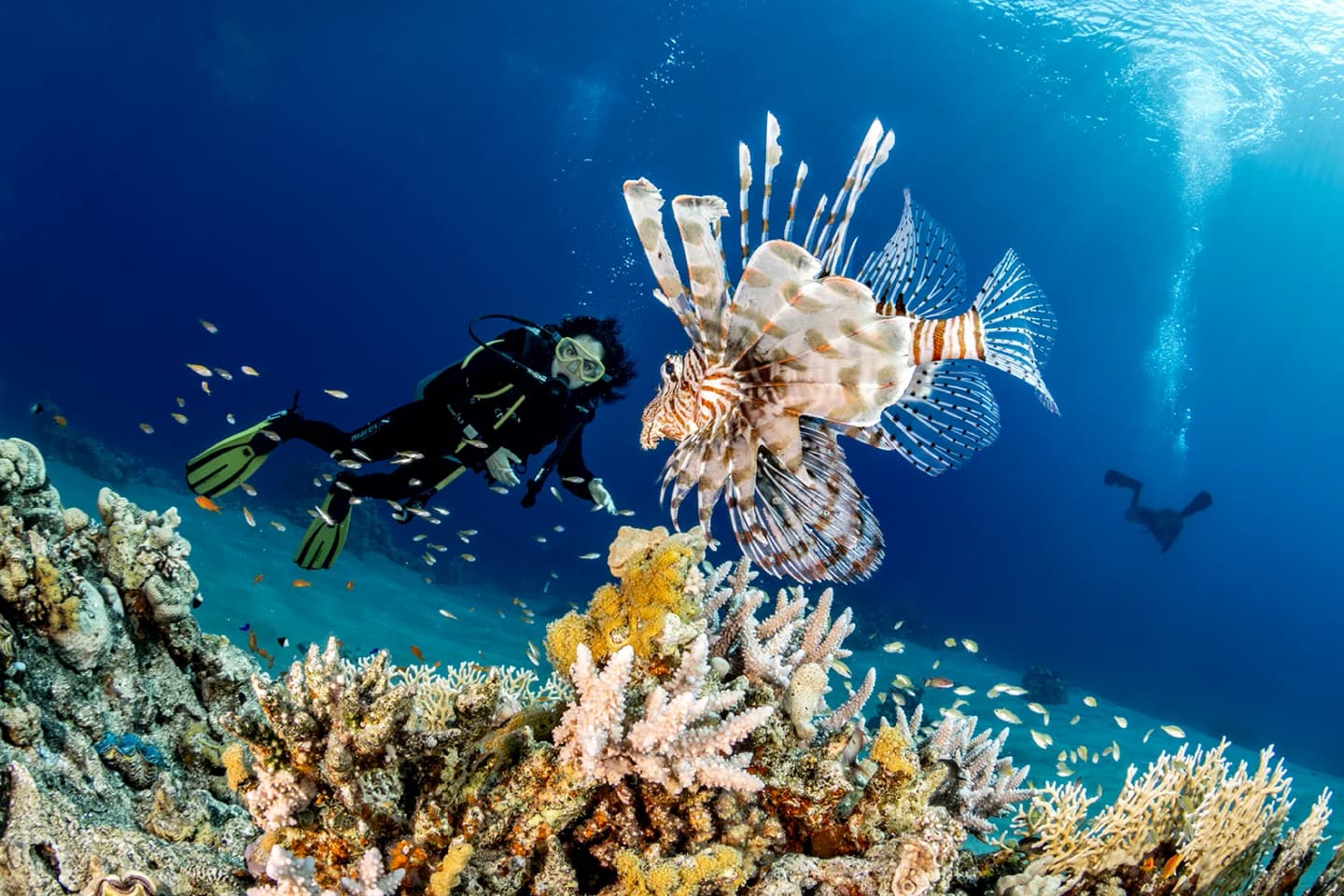
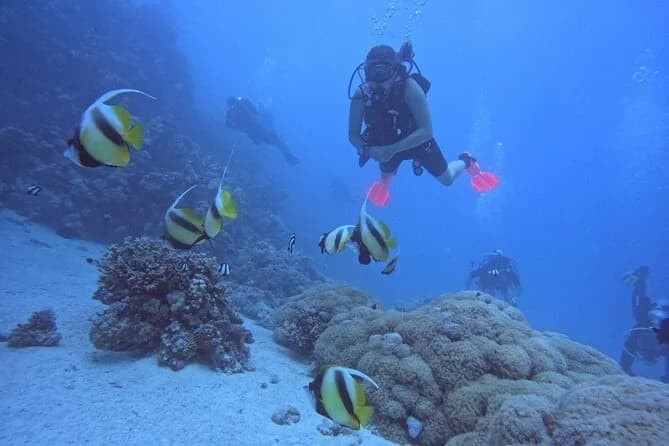
- Signature snorkel/dive ecology: shallow seagrass bays + healthier coral systems = better odds for turtles, dugongs (in the right bays), and less-stressed marine life.
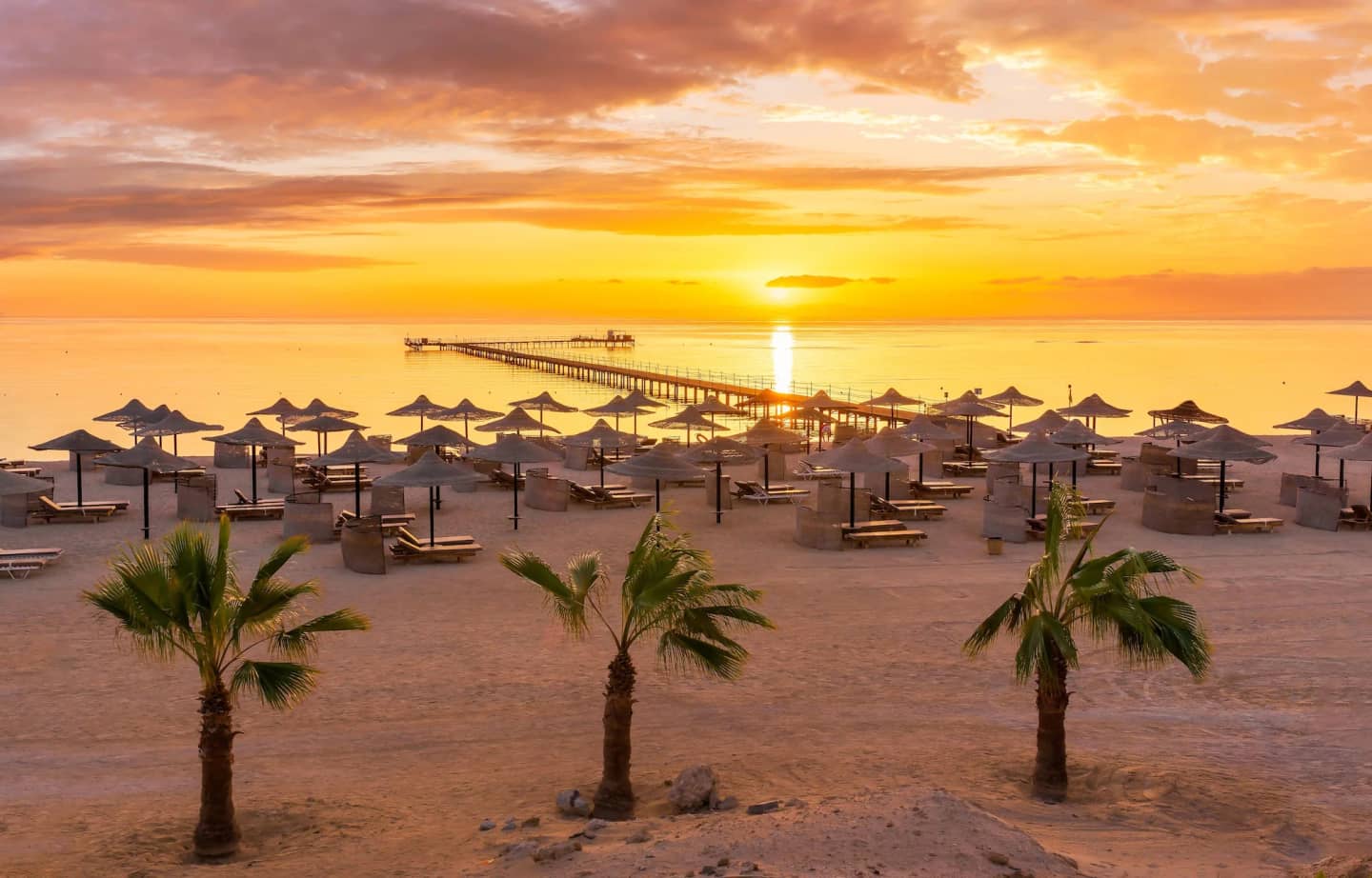
- Quieter beaches and resorts: fewer hawkers, fewer party boats, more early nights and sunrise swims.
- Access to iconic dive sites: offshore reefs like Elphinstone are a draw for experienced divers when conditions allow; Routri’s Elphinstone Reef dive guide explains the reality of exposure and why it’s not a beginner site.
- Trade-offs: distance and limited transport means tighter schedules and higher last-mile taxi costs.
- Fewer independent restaurants/shops: you’ll often be on a resort bubble unless you plan transport.
- Wind exposure is real: sheltered bays can be glassy, exposed beaches can be choppy; this hits snorkel comfort hard.
Part 3: The Logistics (How to Do It Right)
The corridor is commonly described as roughly 280–285 km, with a typical private transfer time of 3.5–4.5 hours depending on pickup/drop-off points and stops. The drive itself feels like “highway trance” (desert glare, heat shimmer that makes asphalt look wet in summer), broken by checkpoints and the occasional “tea stop” unless you say “direct, no stops.” If you’re choosing between transport types, Routri’s Red Sea buses and transfers guide is useful context for what’s smooth versus what becomes a last-mile mess.
Distance and realistic travel time (plan this, not the best-case)
- Coastal distance: commonly stated around 280–285 km.
- Typical transfer time: 3.5–4.5 hours depending on start/end points and stops.
Time killers you should assume
- City exits: leaving Hurghada can add 20–40 minutes depending on traffic and hotel zone.
- Checkpoint pauses: usually short, but they still break the flow.
- Driver “tea stop” culture: some drivers stop unless you explicitly request direct travel.
Option A — Private transfer (best for comfort + dive gear)
- 2025 private car one-way: typically €90–€120 per vehicle (Hurghada → Marsa Alam).
- 2025 private minivan: roughly €130–€150 per vehicle for small groups.
What “private” should include: AC that works, seat belts, clear waiting time (if airport pickup), and a written definition of drop-off (Port Ghalib vs Marsa Alam city vs a specific resort). Cheap quotes can mean older cars, tip pressure, or “per person” confusion—get “per car” in writing.
Option B — Taxi (works, but negotiation is a skill test)
- 2025 taxi quotes: commonly around €100–€130 per vehicle one-way.
- Rules that prevent the argument: agree total in advance (and currency), clarify if stops are included, and pay at arrival if possible (or a small deposit at most).
Option C — Public bus (cheap, but adds last-mile hassle)
- 2025 ticket price: often €10–€15 per person.
- Travel time: often 5–6 hours depending on stops and routing.
- Reality check: you may arrive far from your resort and need a taxi; night buses can be cold (AC blasting) and tiring; seats can sell out in busy periods.
Option D — Shuttle/transfer benchmarks (aggregator-style)
- Some listings show shuttle estimates around $70–85 with roughly 3–4 hours travel time for Hurghada ↔ Marsa Alam legs (often referenced via Rome2Rio).
Option E — Flights (not practical for this pair)
For most travelers, there’s no meaningful direct air bridge here; road transfer is the default.
Weather + sea conditions (temps + wind in knots, and what it means)
This is planning-level, not a promise: many public summaries list wind in mph or km/h; converting the cited mph averages to knots gives usable numbers for snorkel comfort. For Hurghada, cited averages of 11.3–14.5 mph convert to roughly 9.8–12.6 knots. The real-life impact is simple: a 12–15 knot day can feel rough in open water off a boat, while sheltered lagoons can stay manageable. Water temperature benchmarks commonly cited: Hurghada sea temps around 21°C in the coolest month (March) and about 28°C in the warmest month (August). Marsa Alam is often described as windy year-round with a typical air temperature range around 16–34°C; operationally, many days sit in a 10–16 knot breeze, with stronger wind windows where some Red Sea wind calendars market 15–25 knots during the main wind season.
| Season | Hurghada air (°C) | Marsa Alam air (°C) | Typical wind feel (knots) | Sea temp cue | Travel/booking impact |
|---|---|---|---|---|---|
| Winter (Dec–Feb) | Mild days, cool nights | Mild/comfortable | ~10–16 kts on many days (breezy) | Sea often 21–24°C range (Hurghada water cool end ~21°C cited for March) | Good for transfers and desert trips; bring a neoprene top for long snorkels |
| Spring (Mar–May) | Warmer, very pleasant | Warmer | Breezy days common; watch forecasts | Warming | Strong window for Marsa Alam day trips + diving; demand rises |
| Summer (Jun–Aug) | Hot (peak heat) | Hot | Wind can help; strong wind periods exist | Warmest water (Hurghada ~28°C Aug cited) | Midday transfer heat is real; plan early departures |
| Autumn (Sep–Nov) | Warm, easing | Warm, easing | Hurghada notes: Sep higher winds vs Nov calmer | Still warm | Shoulder-season sweet spot; solid diving windows |
Insider Tips & Scams to Avoid
The annoying problems on this route aren’t dramatic—they’re petty and predictable: per-person price switches, currency games, and fake fees. Treat every quote like a contract and you’ll avoid most of it. If you want extra context before you land, Routri’s Red Sea transport guide explains how last-mile transport and timing can derail “cheap” options.
Transfer haggling traps (Hurghada especially)
- “Price is per person” switch: a casual “€40” becomes €40 per person later. Fix it in writing: “€___ total for car, one-way, to Resort Name.”
- Currency confusion: quoted in euros, then collected in EGP at a bad rate. Choose a currency and stick to it.
- Fake “toll” or “checkpoint fee”: checkpoints don’t require tourist cash payments here. If claimed, ask for a receipt or call the transfer company.
Bus station and “helper” games
- Unwanted porter pressure: someone grabs your bag then demands money. Keep your bag; if you accept help, agree a tip first.
- Wrong platform “guiding”: you can be steered onto a different operator’s bus. Verify the company name on your ticket and on the windshield.
The “dugong guarantee” scam
No ethical operator can guarantee a dugong. The honest pitch is “higher chance in the right bay, at the right time, with respectful behavior,” not “100%.” For Marsa Alam marine-life context, Routri’s Marsa Alam diving and dugongs guide is a useful reality check.
Equipment rental price creep
At popular bays, you’ll see “standard rates,” then get offered “better gear” for extra. Decide your max price before you arrive. If you care about comfort, bring your own mask.
Safety & Ethics
If you’re trying to see Dugong Egypt, ethics isn’t optional—it’s the difference between a calm encounter and a stressed animal that leaves. The water safety piece is equally blunt: wind + chop can exhaust beginners quickly, especially outside sheltered bays. If it’s a 12–18 knot day and you’re planning a long surface swim, use a flotation aid or skip it. For divers, Elphinstone is exposure-driven (currents and sea state call the shots), and Routri’s Elphinstone logistics and safety guide sets expectations.
Dugong and turtle ethics (what good looks like)
- No chasing, no crowding: if you have to kick hard to keep up, you’re too close.
- Stay off the seagrass: seagrass is the food source; trampling/fin-slicing matters.
- No touching: touching stresses animals and can remove protective coatings.
- Choose operators who brief behavior: proper guides explain distance, approach angle, and what to do if a dugong surfaces nearby.
Road safety: day travel is calmer
For this corridor, the risk factor is usually fatigue + night driving more than road quality. If you can choose, depart early morning—less stress, fewer surprises, and better visibility if anything goes wrong.
Booking & Logistics
If your goal is either (1) a clean Hurghada to Marsa Alam relocation with luggage/dive gear or (2) a targeted Marsa Alam day trip for turtles/dugongs, buy the right product and stop improvising mid-trip. For door-to-door moves, Routri’s Marsa Alam: private transfer to/from Hurghada matches what you should demand in 2025: a fixed quote, an actual vehicle with working AC, and a defined pickup/drop-off zone. For dugong-focused snorkeling without committing to a full week down south, Routri’s Hurghada: Abu Dabbab Dugong Bay snorkelling day trip is the simplest “one booking” solution (transport + water time) when you want the seagrass-bay shot at a dugong without self-managing taxis, timing, and last-mile chaos.
Step 1: Decide if you’re day-tripping or relocating
- Based in Hurghada and just want dugong odds: a true day trip is long—roughly 8 hours round-trip driving plus water time. It’s only enjoyable with a private driver and an early start.
- Relocating (Hurghada → Marsa Alam/Port Ghalib): the transfer itself is straightforward—book it like an airport transfer and lock the details in writing.
Step 2: Choose your transport tier (and what to pay in 2025)
- Private transfer (best overall): €90–€120 per car one-way in 2025; minivan €130–€150 for groups.
- Budget bus: €10–€15 per person, but expect extra taxi costs at the end and longer time (5–6 hours).
Step 3: For dugong-focused snorkeling, know the 2025 price band
- Abu Dabbab-style full-day snorkeling is commonly sold around $80 per person on big marketplaces (listing example in the raw notes).
- Entrance fee reality: Abu Dabbab is widely reported to have an entrance fee around €20 per person (2025 mentions exist).
Step 4: For divers, anchor your expectations to real logistics
Elphinstone is a real draw for experienced divers, but conditions (wind/sea state) can cancel or change plans. For a planning framework (not hype), use Routri’s Elphinstone Reef shark diving safety guide to understand why “yes” can turn into “not today” based on sea state.
Step 5: Payment method that protects the traveler (and still sells)
Pay Cash on Arrival (for transfers and many locally-run tours) reduces deposit disputes, forces the provider to show up with the agreed vehicle/guide, and avoids card issues in remote areas. Do it safely: confirm on WhatsApp/email the date, pickup time, pickup point, destination hotel, total price, vehicle type, luggage count, and “cash on arrival.” Carry small bills—getting change for a €100 note on a desert highway is a gamble.
FAQs
These are the questions people actually search when they’re deciding whether to relocate south, attempt a long day trip, or book a wildlife-focused bay without getting scammed.
What’s the fastest way to travel Hurghada to Marsa Alam in 2025?
A private car transfer is usually the fastest practical option, commonly taking about 3.5–4.5 hours depending on pickup/drop-off and stops, over roughly 280–285 km. If you want to lock it in as a fixed quote instead of negotiating on the street, use Routri’s private transfer to/from Hurghada.
How much is a private transfer Hurghada to Marsa Alam right now (2025 pricing)?
Typical 2025 pricing is €90–€120 per car one-way, with minivans around €130–€150 depending on vehicle type and exact hotel zone.
Can I do a Marsa Alam day trip from Hurghada without staying overnight?
Yes, but it’s a long day: plan roughly 4 hours each way by road plus beach/snorkel time. A bus makes the schedule tight; a private driver makes it realistic and less exhausting. If your aim is specifically a seagrass-bay snorkel with dugong odds, Routri’s Abu Dabbab Dugong Bay day trip from Hurghada keeps the logistics simple.
Where can I realistically see Dugong Egypt on a day trip?
Your best odds are in seagrass bays in the Marsa Alam region (that’s the dugong feeding zone). Go early, slow down in the water, and prioritize ethical guiding. No operator can guarantee a dugong because it’s a wild animal—avoid “100% guaranteed” claims.
How much does an Abu Dabbab-style snorkeling tour cost in 2025?
Big marketplaces commonly list full-day Abu Dabbab snorkeling trips around $80 per person (example listing referenced in the raw notes), but pricing varies by inclusions and pickup point. Also budget for the commonly reported ~€20 entrance fee in 2025 mentions.
Is the public bus a good idea for Hurghada to Marsa Alam if I have dive gear?
Only if you’re comfortable managing your gear and transfers. Bus tickets are often quoted €10–€15 per person in 2025 and can take 5–6 hours, then you may need a taxi to your resort. With bulky bags, a private car is usually worth it.
When is the best season for a Marsa Alam day trip for snorkeling comfort?
Shoulder seasons (spring/autumn) usually balance warmth and manageable wind. Planning-level wind numbers cited for Hurghada convert to roughly ~9.8–12.6 knots on average (from 11.3–14.5 mph), and many days across the coast sit in a 10–16 knot breeze; sheltered bays can stay swimmable even when exposed water looks sloppy. For sea temperature comfort, cited Hurghada water benchmarks run roughly 21°C (cool end) to 28°C (warm end), which is a practical proxy for “how cold will this feel after 40 minutes?”
Why do some operators push card deposits, and is Pay Cash on Arrival better?
Card deposits lock you in even if the vehicle or tour quality disappoints. For local transfers and many small-group tours, Pay Cash on Arrival keeps leverage: you pay after the driver shows up with the agreed vehicle and the booking details match. Use written confirmations so “cash on arrival” doesn’t turn into “cash before departure.”
Bottom line: if you want maximum convenience and quick booking, stay Hurghada-based and accept the crowds and marina noise. If you want early-morning calm, seagrass-bay snorkeling, and better wildlife odds, move south—just budget for the distance, the wind reality, and the fact that the only “guarantee” with dugongs is that anyone promising 100% is selling you something.
Further Reading on Routri:
- Marsa Alam: Private Transfer to/from Hurghada
- Hurghada: Abu Dabbab Dugong Bay Snorkelling Day Trip
- Red Sea Transport: Buses, Sea Shuttles & Transfers
- Hurghada vs Sharm vs Marsa Alam: Which Red Sea Destination Is Best
- Red Sea Diving & Snorkeling: Marsa Alam to Hurghada Guide
- Elphinstone Reef Diving Guide (Logistics & Conditions)