

Diving The Brothers Islands: Sharks, Wreck Lore, and Responsible Luxury
Quick Summary: An advanced liveaboard to the Brothers delivers apex shark encounters on sheer walls and historic wrecks, balanced by pro guiding, smart safety protocols, and conservation-minded comfort. A Red Sea expedition for experienced divers seeking big-animal moments done right.
Dawn breaks rose-gold over two tiny volcanic islets in the middle of the Egyptian Red Sea. Below, sheer walls vanish into ink-blue water; above, a liveaboard hums as tanks clink and coffee steams. A shadow materializes in the blue—sleek, assured. Your guide holds the line, you settle your breathing, and the Brothers welcome you with a shark’s slow, electric pass.
What Makes This Experience Unique
The Brothers are a true pelagic crossroads: oceanic whitetips, schooling hammerheads, and the chance of threshers gliding out of the abyss. Combine that with coral-draped wrecks—Numidia and Aida II—and you’ve got big-animal drama plus history. Crucially, top-tier crews manage currents, blue-water safety, and shark etiquette with precision. Start with our in-depth Brothers Islands diving guide for site-by-site context.
Where to Do It
These marine-park islets sit roughly 60–70 km offshore in Egypt’s central Red Sea, best accessed by liveaboard routes departing Hurghada or Port Ghalib. Logistically, Hurghada is a reliable hub with marine infrastructure, spare parts, and experienced crews. Expect steep walls, moorings set on the lee, and dive plans adjusting to the day’s wind, current, and visibility.
Best Time / Conditions
Late spring into early summer often brings schooling hammerheads along the north plateaus; autumn can be prime for oceanic whitetips. Water sits around 22–24°C in cooler months and 27–29°C in summer, with medium to strong currents and occasional downwellings. Visibility ranges 20–40 m. This is advanced drift-diving territory where negative entries and DSMBs are the norm.
What to Expect
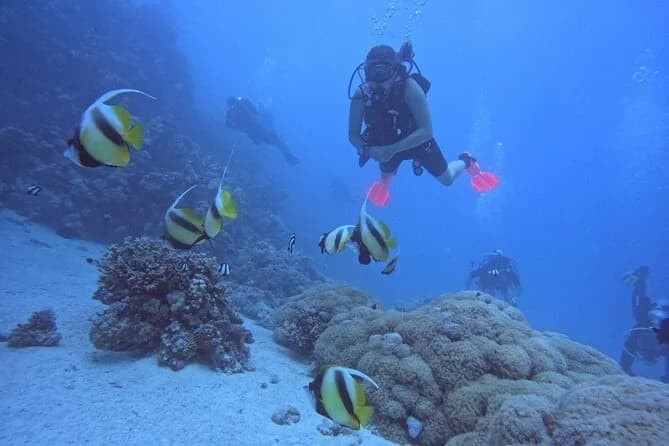
Reef walls spool past in soft coral and giant fans as you hold a contour around 20–30 m, scanning the blue for silhouettes. On the north end, Numidia’s ribs perch between about 10–40 m, while Aida II lies deeper with glassfish clouds and photogenic soft corals. Dives run 45–60 minutes, with blue-water safety stops and zodiac pickups.
Who This Is For
Experienced divers who love current, clean protocols, and big-animal discipline. Guides will expect calm control, situational awareness, and buoyancy that doesn’t nick fragile fans. Photographers will revel in gorgonian landscapes and pelagic passes; tech-curious divers can explore wreck profiles within recreational limits. If you want gentle, shallow reefs, consider warm-up days closer inshore first.
Booking & Logistics
Choose a 3–7 night liveaboard running the Brothers or BDE circuit (Brothers–Daedalus–Elphinstone). Crossings are typically 4–8 hours depending on port and weather. Bring an SMB, spool, audible/visual surface kit, and reef-friendly exposure protection. A private refresher day in Hurghada helps sharpen skills (private dive day in Hurghada), or tune up in Sinai before flying over (Sharm El Sheikh refresher).
Sustainable Practices
Reputable operators use park moorings (no anchoring), limit group sizes, and brief strict shark codes: no touching, no feeding, maintain space, stay vertical and calm. Boats reduce single-use plastics, separate waste, and desalinate responsibly. Crews coordinate drift tracks with GPS and radios to minimize engine time around wildlife. Review Red Sea shark diving safety tips before you board.
FAQs
These islands are remote and conditions dynamic; preparation matters as much as desire. Expect strong currents, blue-water ascents, and close—but respectful—shark passes. Think of this as a conservation-led expedition: your decisions contribute to outcomes. With the right team, protocols, and mindset, apex moments unfold safely without compromising the Brothers’ wilderness energy.
What certification and experience do I need?
Advanced Open Water (or equivalent), recent dives, and comfort deploying an SMB in current are baseline. Many operators ask for 50–100 logged dives with drift experience. Nitrox certification extends safe bottom time on repetitive days. If rusty, add a coached day beforehand to refine buoyancy, trim, and emergency signaling.
Which sharks are most likely, and how should I behave?
Oceanic whitetips are the Brothers’ signature sighting; hammerheads school off the north plateaus, with possible threshers at depth. Keep hands close, remain vertical, maintain eye contact, and give right-of-way. No chasing or flashing lights into eyes. If a shark closes, stay calm, present a solid profile, and follow your guide’s spacing.
How rough are crossings—and how do I manage seasickness?
Open-water runs can be lumpy, especially in wind. Choose a mid-ship cabin, avoid heavy meals pre-crossing, and use doctor-advised medication. Crews plan night transits and lee-side moorings for calmer intervals. Hydrate, rest between dives, and keep your kit stowed to prevent motion-related fatigue and gear mishaps.
Out here, luxury is measured in competence: a steady zodiac handoff, a crisp briefing, a respectful shark pass. When you sail back to civilization, fold in a few easy days across Egypt’s Red Sea destinations—reef-hopping, logbook storytelling, and that contented glow only the Brothers can spark.