Routri
Routri

Langue

Devise

Assistance

  • Nous Contacter
  • Mentions Légales
  • Politique de Confidentialité
  • Politique de Cookies
  • Conditions de Service
  • Remboursement & Annulation

Entreprise

  • À Propos de Nous
  • Carrières
  • Blog
  • Gift Cards
  • Sustainability

Work With Us

  • Become a Supplier
  • Affiliate Program
  • Travel Agents

Nous Acceptons

VisaMastercardPayPalAmerican ExpressApple PayGoogle PayMaestroDiscover

Langue

Devise

Assistance

  • Nous Contacter
  • Mentions Légales
  • Politique de Confidentialité
  • Politique de Cookies
  • Conditions de Service
  • Remboursement & Annulation

Entreprise

  • À Propos de Nous
  • Carrières
  • Blog
  • Gift Cards
  • Sustainability

Work With Us

  • Become a Supplier
  • Affiliate Program
  • Travel Agents

Nous Acceptons

VisaMastercardPayPalAmerican ExpressApple PayGoogle PayMaestroDiscover

© 2026 Routri. All rights reserved.

  1. Accueil
  2. /Travel Inspiration
  3. /Red Sea Water Temperature by M...
Snorkeling
Diving
Marine life

Red Sea Water Temperature by Month: Chart for Hurghada to Dahab

Monthly Red Sea water temps (°C/°F) for Hurghada, Sharm, Marsa Alam, Dahab & El Gouna. Free cancellation

MK
Mikayla Kovaleski
mars 21, 2026•9 min read
Share on
Red Sea water temperature by month

Quick Summary

  • Warmest water: August — Marsa Alam 29.8°C (85.6°F), Hurghada 28.9°C (84.0°F), Sharm 28.8°C (83.8°F), El Gouna 28.4°C (83.1°F), Dahab 27.4°C (81.3°F)
  • Coldest water: February–March — Dahab 21.6°C (70.9°F), El Gouna 22.2°C (72.0°F), Sharm 22.4°C (72.3°F), Hurghada 22.5°C (72.5°F), Marsa Alam 22.8°C (73.0°F)
  • Best months for wetsuit-free snorkeling: July–September, when most locations reach 27.5–29.8°C (81.5–85.6°F)
  • Best months for comfortable scuba diving: May, June, October, November at 24.5–27.8°C (76.1–82.0°F) depending on destination
  • Southern advantage: Marsa Alam runs 0.5–1.4°C warmer than Hurghada year-round, peaking at 29.8°C versus 28.9°C in August
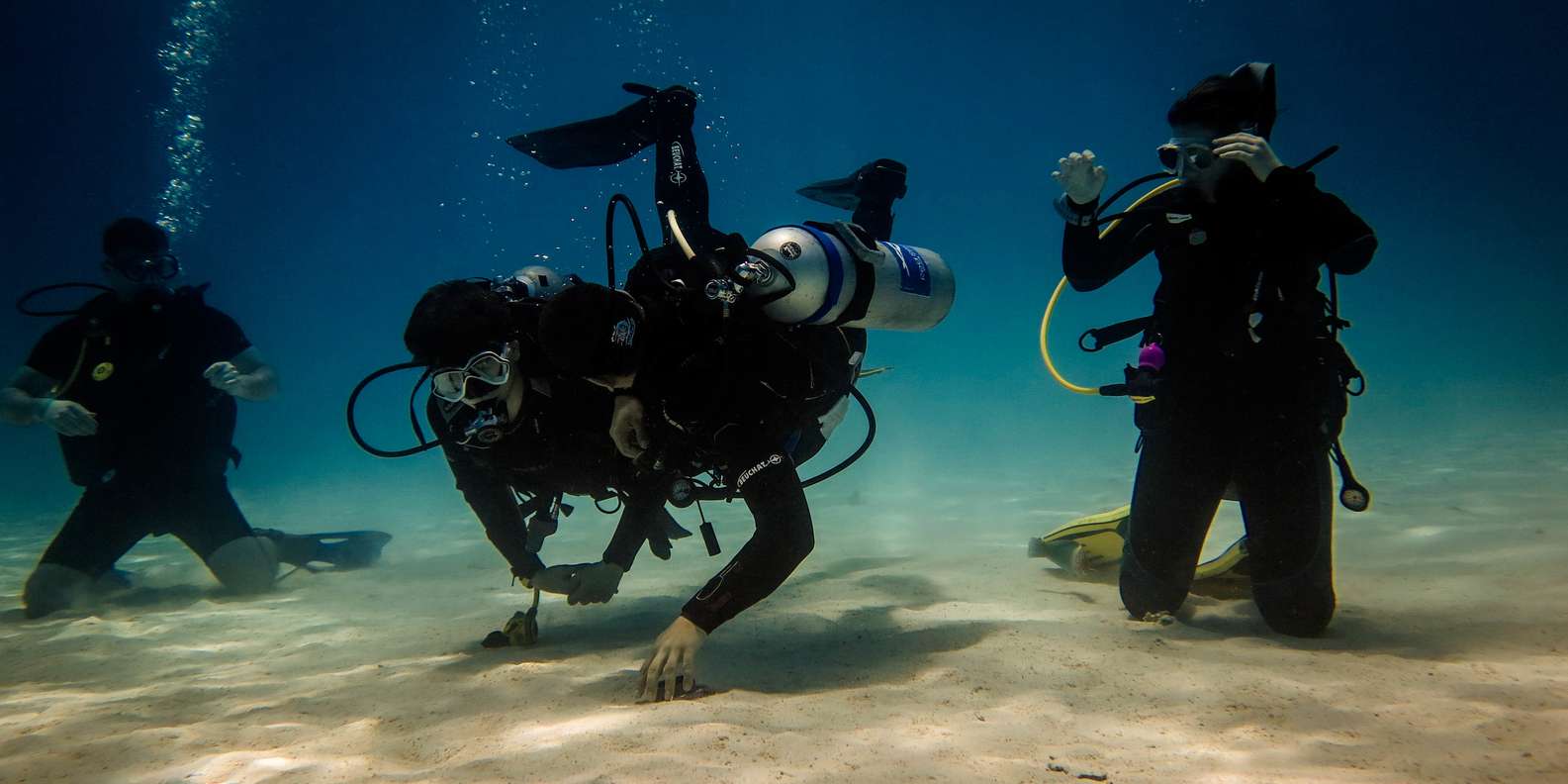
Tour image 1
Hurghada: PADI Open Water Diving Course

FAQ

Q1: What is the Red Sea water temperature by month in Egypt? A1: In Egypt's Red Sea, average water temperature runs from about 21.6–23.3°C (70.9–73.9°F) in late winter to 27.4–29.8°C (81.3–85.6°F) in August, depending on location.

Q2: What is the coldest month for swimming in Hurghada? A2: March is the coldest point in the Hurghada cycle at about 22.5°C (72.5°F) on monthly averages.

Q3: What is the warmest month in the Red Sea for snorkeling? A3: August is typically the warmest month, reaching about 28.4–29.8°C (83.1–85.6°F) across key resorts in this guide.

Q4: Which is warmer: Marsa Alam or Hurghada in winter? A4: Marsa Alam is warmer in winter: January averages 23.3°C (73.9°F) versus Hurghada 23.2°C (73.8°F), and February 22.8°C (73.0°F) versus Hurghada 22.6°C (72.7°F).

Q5: Do I need a wetsuit for Red Sea diving in winter? A5: Most divers are comfortable in a 5 mm wetsuit from December to March when water is roughly 21.6–24.6°C (70.9–76.3°F) across the main destinations.

Q6: Is Sharm El Sheikh warmer than Hurghada? A6: Sharm El Sheikh is very close to Hurghada but trends slightly cooler in summer; August is 28.8°C (83.8°F) in Sharm versus 28.9°C (84.0°F) in Hurghada.

Q7: What is the best time for snorkeling tours in Hurghada? A7: The best time for snorkeling tours in Hurghada is July–September when water temperature reaches 28–29°C (82–84°F), allowing comfortable extended sessions without thermal protection.

Red Sea Water Temperature by Month Chart

If you only need one reference table, use this: monthly average water temperature for five major Red Sea destinations in both °C and °F, based on long-term climate normals.

Monthly average water temperature

MonthHurghada (°C)Sharm El Sheikh (°C)Marsa Alam (°C)Dahab (°C)El Gouna (°C)
Jan23.223.223.322.222.9
Feb22.622.522.821.622.2
Mar22.522.423.021.622.2
Apr23.223.123.922.222.9
May24.924.725.623.624.5
Jun26.326.127.324.925.9
Jul28.128.029.026.627.6
Aug28.928.829.827.428.4
Sep27.927.828.926.627.5
Oct27.527.627.825.927.1
Nov26.326.326.324.825.9
Dec24.624.624.623.424.2

Monthly average water temperature in Fahrenheit

MonthHurghada (°F)Sharm El Sheikh (°F)Marsa Alam (°F)Dahab (°F)El Gouna (°F)
Jan73.873.873.972.073.2
Feb72.772.573.070.972.0
Mar72.572.373.470.972.0
Apr73.873.675.072.073.2
May76.876.578.174.576.1
Jun79.379.081.176.878.6
Jul82.682.484.279.981.7
Aug84.083.885.681.383.1
Sep82.282.084.079.981.5
Oct81.581.782.078.680.8
Nov79.379.379.376.678.6
Dec76.376.376.374.175.6

Data source: Climate-Data.org (1991–2021 climate normals; water temperature tables shown on each destination page).
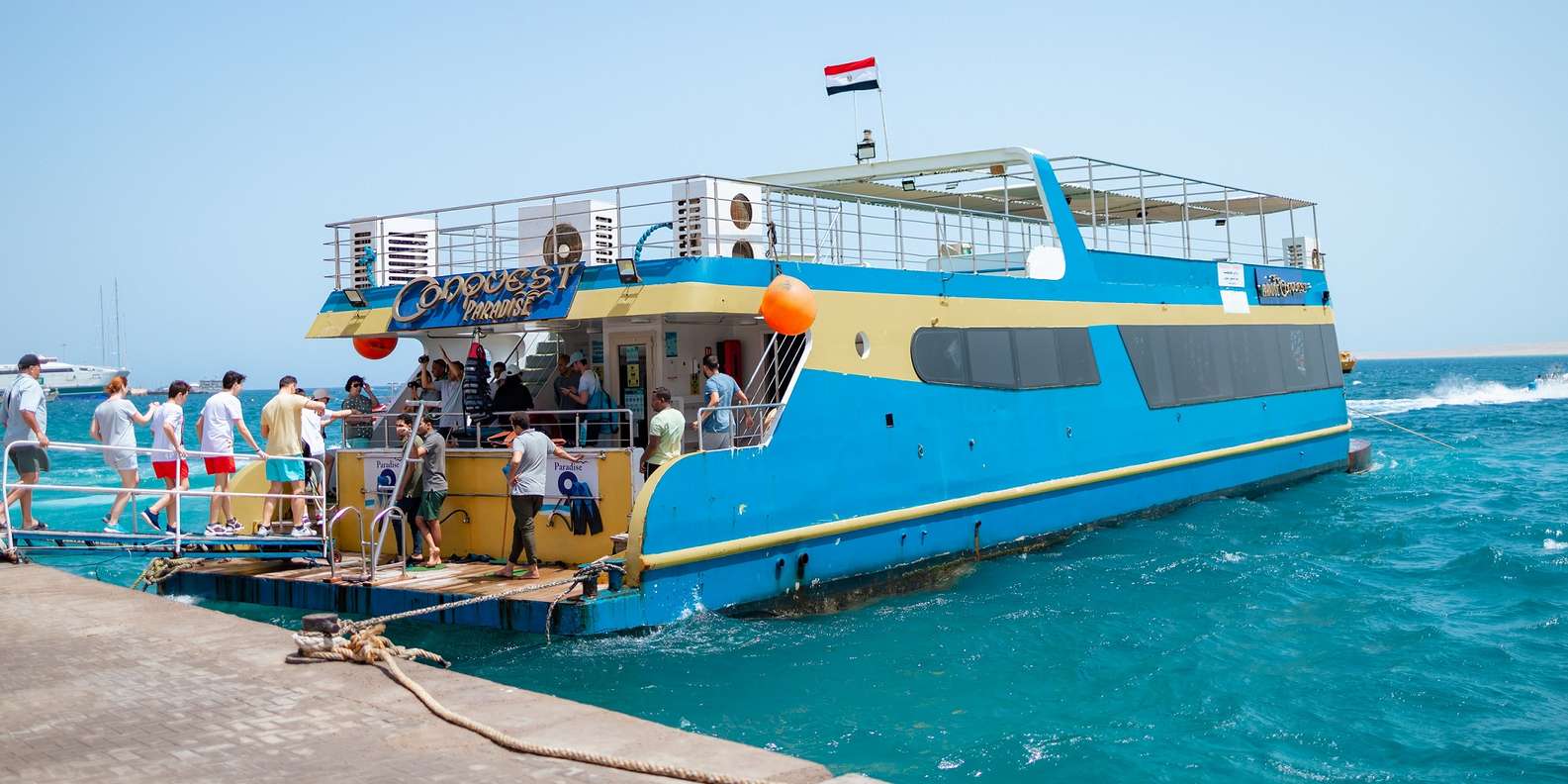
Hurghada: Semi-Submarine Cruise & Guided Snorkelling

Air Temperature Context

Water temperature is only half the comfort equation—wind and air temperature determine whether a 23°C swim feels refreshing or cold. Below are Hurghada monthly mean air temperatures from long-term climate data.

In winter months (December–February), air temperatures of 16–18°C combined with 22–23°C water create noticeable wind chill after exiting the water, especially on boat decks. Summer months (June–August) see air temperatures of 29–31°C, making even 27°C water feel refreshing on entry.

Hurghada air temperature by month

MonthAvg air (°C)Avg min (°C)Avg max (°C)
Jan16.713.220.2
Feb18.014.221.7
Mar20.516.524.2
Apr23.619.427.2
May27.223.030.6
Jun29.625.533.1
Jul31.027.134.2
Aug31.227.434.5
Sep29.125.332.6
Oct26.122.729.6
Nov22.018.725.4
Dec18.314.921.7

Source: Climate-Data.org, Hurghada climate table (1991–2021 normals).

Wetsuit Recommendation by Month

Most travelers can snorkel without a wetsuit when water reaches ≥27.5°C (81.5°F), while repetitive scuba dives typically require at least 3 mm protection when water drops ≤26°C (78.8°F), based on common Red Sea operator practice and diver feedback. The table below combines water temperature data from Climate-Data.org with practical field experience from diving excursions from Hurghada and other Red Sea bases.

Practical wetsuit guide for Egypt's Red Sea

MonthTypical water range (°C)Snorkeling comfortScuba comfortCommon recommendation
Jan22.2–23.3Cool exits + windCool on 2nd dive5 mm full suit
Feb21.6–22.8CoolCool5 mm full suit
Mar21.6–23.0Cool to mildCool to mild5 mm (warm divers: 3 mm)
Apr22.2–23.9MildMild3 mm full suit
May23.6–25.6ComfortableComfortable3 mm (warm snorkelers: shorty)
Jun24.9–27.3ComfortableComfortableShorty or 3 mm
Jul26.6–29.0WarmWarmNo suit or shorty
Aug27.4–29.8WarmestWarmestNo suit
Sep26.6–28.9WarmWarmNo suit or shorty
Oct25.9–27.8ComfortableComfortableShorty or 3 mm
Nov24.8–26.3Comfortable to mildComfortable to mild3 mm full suit
Dec23.4–24.6Cool-mildCool-mild5 mm (warm divers: 3 mm)

Temperature inputs: monthly averages by destination from Climate-Data.org tables above.

Hurghada: Day Snorkeling with Dolphins

Best Months by Activity

For most visitors, the best overall water-comfort months are June, September, and October—warm enough for extended swims without thermal protection, but not at peak heat load on boats.

Best months for snorkeling without a wetsuit

  • Best: August at 27.4–29.8°C (81.3–85.6°F) across all five locations
  • Also excellent: July at 26.6–29.0°C (79.9–84.2°F) and September at 26.6–28.9°C (79.9–84.0°F)
  • Good for warm-water preference: June at 24.9–27.3°C (76.8–81.1°F)

Best months for comfortable scuba diving

May, June, October, and November offer the best balance of thermal comfort and stable conditions for multi-dive days:

  • May: 23.6–25.6°C (74.5–78.1°F) — comfortable in 3 mm, minimal thermocline
  • June: 24.9–27.3°C (76.8–81.1°F) — ideal for all-day diving with shorty or 3 mm
  • October: 25.9–27.8°C (78.6–82.0°F) — post-summer warmth, excellent visibility
  • November: 24.8–26.3°C (76.6–79.3°F) — comfortable in 3 mm, lower boat traffic

Destination Comparison

The biggest pattern is latitude and geography: Marsa Alam (south) is consistently warmest, while Dahab (Gulf of Aqaba) is consistently coolest due to gulf dynamics and deeper water exchange.

Peak-summer difference

August average water temperatures by destination:

  • Marsa Alam: 29.8°C (85.6°F)
  • Hurghada: 28.9°C (84.0°F)
  • Sharm El Sheikh: 28.8°C (83.8°F)
  • El Gouna: 28.4°C (83.1°F)
  • Dahab: 27.4°C (81.3°F)

Late-winter difference

February average water temperatures by destination:

  • Marsa Alam: 22.8°C (73.0°F)
  • Hurghada: 22.6°C (72.7°F)
  • Sharm El Sheikh: 22.5°C (72.5°F)
  • El Gouna: 22.2°C (72.0°F)
  • Dahab: 21.6°C (70.9°F)

Year-round pattern

Marsa Alam maintains a 0.5–1.4°C advantage over Hurghada in 10 of 12 months, with the largest gap in August (0.9°C) and smallest in December (0°C). Dahab consistently runs 0.7–1.5°C cooler than Hurghada due to Gulf of Aqaba water circulation patterns.

Thermocline Depth and What Divers Should Expect

A thermocline is most noticeable in summer when surface water peaks; divers can feel a sudden 2–4°C temperature drop on deeper walls and channels even when the surface reads 28–30°C. This is a common Red Sea diving condition on sites deeper than 20 meters.

The practical ranges below reflect operator guidance and diver reports rather than published measurement datasets, as location-specific thermocline-depth data is not systematically published for recreational dive sites.

Practical thermocline expectations

  • July–September: Thermocline most pronounced; commonly felt around 15–30 m on wall dives and channel sites
  • April–June and October: Mild thermoclines; often 20–30 m if present, less abrupt temperature change
  • November–March: Thermocline usually weak or absent; water column feels more uniform from surface to 30 m
  • Site-specific variation: Offshore islands and current-swept sites show stronger thermoclines than sheltered bay reefs

How Water Temperature Changes Marine Life Encounters

Warmer water increases overall fish activity and allows longer in-water time for snorkelers without thermal stress. Cooler months often bring "crisper" comfort for divers in thicker suits, but shorter snorkel sessions due to wind chill after exiting.

What typically improves in warmer months

June–September water temperatures of 24.9–29.8°C (76.8–85.6°F) across destinations enable:

  • Longer snorkeling sessions with minimal heat loss—60+ minutes comfortable for most swimmers
  • More relaxed surface intervals on boats because you're not fighting cold after dives
  • Higher fish activity levels, especially schooling species around reef structures

What typically improves in shoulder months

April–May and October–November offer comfortable diving at 22.2–27.8°C (72.0–82.0°F) with practical advantages:

  • Comfortable all-day diving with 3 mm exposure protection and stable conditions
  • Better pacing: less extreme midday heat than July–August when Sharm daytime highs peak at 35°C
  • Often clearer water due to lower plankton bloom compared to late summer

Coral Spawning Timing

Coral spawning is tied to seasonal warming and lunar cycles; many Red Sea operators observe late spring through summer as the most likely window, but exact nights vary by reef, species, and moon phase. Coral spawning events typically occur 3–7 days after a full moon when water temperature rises above 26°C, making May–August the most probable window across Egypt's Red Sea destinations.

Practical planning notes

  • Plan a multi-day diving window (7+ nights) in late spring or summer rather than a single-day trip if spawning is your priority
  • Choose destinations with easy access to offshore reefs: Hurghada and El Gouna for Giftun Island reefs, Sharm for Ras Mohammed and Tiran, Marsa Alam for southern reef systems
  • Book liveaboard diving trips for maximum flexibility to chase spawning events across multiple sites

Local Insight

The temperature headline doesn't tell the real story—wind and site choice determine actual comfort. Local operators plan snorkeling sites by exposure: sheltered bays and lagoons in winter, open reefs and long drifts in summer.

Hurghada and El Gouna winter comfort strategy: Prioritize leeward sites and shorter surface intervals during December–March. Even though water averages 22.5–23.2°C, the second entry can feel significantly colder due to evaporative cooling from northerly winds on the boat deck. Sites like Giftun Island's southern bays offer better wind protection than exposed northern reefs—a detail that only local operators who run daily snorkeling tours in Hurghada know to adjust for. Dahab depth consideration: Even in August when surface temperature averages 27.4°C, long dives below 20 meters on sites like Blue Hole or Canyon can still feel cool due to stronger water exchange with deeper gulf currents. Pack at least a 3 mm shorty or vest if you chill easily, especially for multi-dive days—a lesson learned from years of guiding technical divers on Dahab's deep sites. Marsa Alam warmth advantage: If you're chasing the warmest winter water for extended snorkeling or freediving, go south—January averages 23.3°C and August reaches 29.8°C, consistently 0.5–1.0°C warmer than Hurghada. Southern sites like Elphinstone and Dolphin House benefit from warmer currents year-round.

Booking Takeaways for Travelers

Match your travel month to your thermal tolerance and activity type, then pick the base town that minimizes compromises.

For warmest water year-round: Choose Marsa Alam—29.8°C (85.6°F) in August and 23.3°C (73.9°F) in January, consistently warmer than northern destinations. For best all-round balance: Target May–June or October–November when water reaches 24–28°C and air temperatures are comfortable for all-day boat trips. Choose Hurghada or El Gouna for convenience and variety of day-trip snorkeling options, or Sharm El Sheikh for access to Ras Mohammed and Tiran reefs. For wetsuit-free snorkeling: Plan July–September when all five destinations average 26.6–29.8°C (79.9–85.6°F), allowing 60+ minute sessions without thermal protection. For multi-dive comfort: Book May, June, October, or November when 3 mm suits provide all-day comfort at 24–27°C without overheating on surface intervals.

Sources

All water temperature data in this guide is sourced from Climate-Data.org climate normals (1991–2021 reference period) for Hurghada, Sharm El Sheikh, Marsa Alam, Dahab, and El Gouna. Air temperature context is sourced from Climate-Data.org Hurghada climate table (1991–2021).

Wetsuit recommendations reflect common practice among PADI-affiliated dive centers operating in Egypt's Red Sea region, based on water temperature ranges and typical diver comfort feedback. Thermocline depth guidance is based on operator experience and diver reports rather than published oceanographic measurement, as systematic thermocline-depth datasets are not publicly available for recreational dive sites.

For current diving conditions, consult PADI Travel (www.padi.com/travel) or the Egyptian Tourism Authority (www.egypt.travel) for official destination information.

Circuits associés

Explore These Destinations

Destination

Hurghada

Discover tours and activities

Destination

Dahab

Discover tours and activities

Trouvez plus d'inspiration voyage

Sharm El Sheikh Itinerary: 3-Day, 5-Day & 7-Day Plans 2026
Apr 18, 2026Sharm El Sheikh Itinerary: 3-Day, 5-Day & 7-Day Plans 2026
par Oriana Findlay
Tiran Island Boat Trips from Sharm El Sheikh: Booking Guide 2026
Apr 18, 2026Tiran Island Boat Trips from Sharm El Sheikh: Booking Guide 2026
par Mustafa Al Ibrahim
Best Time to Visit Sharm El Sheikh — Monthly Weather, Crowds & Diving Conditions
Apr 17, 2026Best Time to Visit Sharm El Sheikh — Monthly Weather, Crowds & Diving Conditions
par Oriana Findlay

FAQs about Red Sea Water Temperature by Month: Chart for Hurghada to Dahab

In Egypt's Red Sea, average water temperature runs from about 21.6–23.3°C (70.9–73.9°F) in late winter to 27.4–29.8°C (81.3–85.6°F) in August, depending on location.

March is the coldest point in the Hurghada cycle at about 22.5°C (72.5°F) on monthly averages.

August is typically the warmest month, reaching about 28.4–29.8°C (83.1–85.6°F) across key resorts in this guide.

Marsa Alam is warmer in winter: January averages 23.3°C (73.9°F) versus Hurghada 23.2°C (73.8°F), and February 22.8°C (73.0°F) versus Hurghada 22.6°C (72.7°F).

Most divers are comfortable in a 5 mm wetsuit from December to March when water is roughly 21.6–24.6°C (70.9–76.3°F) across the main destinations.

Sharm El Sheikh is very close to Hurghada but trends slightly cooler in summer; August is 28.8°C (83.8°F) in Sharm versus 28.9°C (84.0°F) in Hurghada.

The best time for snorkeling tours in Hurghada is July–September when water temperature reaches 28–29°C (82–84°F), allowing comfortable extended sessions without thermal protection. H2: Red Sea Water Temperature by Month Chart If you only need one reference table, use this: monthly average water temperature for five major Red Sea destinations in both °C and °F, based on long-term climate normals. H3: Monthly average water temperature | Month | Hurghada (°C) | Sharm El Sheikh (°C) | Marsa Alam (°C) | Dahab (°C) | El Gouna (°C) | |---|---:|---:|---:|---:|---:| | Jan | 23.2 | 23.2 | 23.3 | 22.2 | 22.9 | | Feb | 22.6 | 22.5 | 22.8 | 21.6 | 22.2 | | Mar | 22.5 | 22.4 | 23.0 | 21.6 | 22.2 | | Apr | 23.2 | 23.1 | 23.9 | 22.2 | 22.9 | | May | 24.9 | 24.7 | 25.6 | 23.6 | 24.5 | | Jun | 26.3 | 26.1 | 27.3 | 24.9 | 25.9 | | Jul | 28.1 | 28.0 | 29.0 | 26.6 | 27.6 | | Aug | 28.9 | 28.8 | 29.8 | 27.4 | 28.4 | | Sep | 27.9 | 27.8 | 28.9 | 26.6 | 27.5 | | Oct | 27.5 | 27.6 | 27.8 | 25.9 | 27.1 | | Nov | 26.3 | 26.3 | 26.3 | 24.8 | 25.9 | | Dec | 24.6 | 24.6 | 24.6 | 23.4 | 24.2 | H3: Monthly average water temperature in Fahrenheit | Month | Hurghada (°F) | Sharm El Sheikh (°F) | Marsa Alam (°F) | Dahab (°F) | El Gouna (°F) | |---|---:|---:|---:|---:|---:| | Jan | 73.8 | 73.8 | 73.9 | 72.0 | 73.2 | | Feb | 72.7 | 72.5 | 73.0 | 70.9 | 72.0 | | Mar | 72.5 | 72.3 | 73.4 | 70.9 | 72.0 | | Apr | 73.8 | 73.6 | 75.0 | 72.0 | 73.2 | | May | 76.8 | 76.5 | 78.1 | 74.5 | 76.1 | | Jun | 79.3 | 79.0 | 81.1 | 76.8 | 78.6 | | Jul | 82.6 | 82.4 | 84.2 | 79.9 | 81.7 | | Aug | 84.0 | 83.8 | 85.6 | 81.3 | 83.1 | | Sep | 82.2 | 82.0 | 84.0 | 79.9 | 81.5 | | Oct | 81.5 | 81.7 | 82.0 | 78.6 | 80.8 | | Nov | 79.3 | 79.3 | 79.3 | 76.6 | 78.6 | | Dec | 76.3 | 76.3 | 76.3 | 74.1 | 75.6 | Data source: Climate-Data.org (1991–2021 climate normals; water temperature tables shown on each destination page). H2: Air Temperature Context Water temperature is only half the comfort equation—wind and air temperature determine whether a 23°C swim feels refreshing or cold. Below are Hurghada monthly mean air temperatures from long-term climate data. In winter months (December–February), air temperatures of 16–18°C combined with 22–23°C water create noticeable wind chill after exiting the water, especially on boat decks. Summer months (June–August) see air temperatures of 29–31°C, making even 27°C water feel refreshing on entry. H3: Hurghada air temperature by month | Month | Avg air (°C) | Avg min (°C) | Avg max (°C) | |---|---:|---:|---:| | Jan | 16.7 | 13.2 | 20.2 | | Feb | 18.0 | 14.2 | 21.7 | | Mar | 20.5 | 16.5 | 24.2 | | Apr | 23.6 | 19.4 | 27.2 | | May | 27.2 | 23.0 | 30.6 | | Jun | 29.6 | 25.5 | 33.1 | | Jul | 31.0 | 27.1 | 34.2 | | Aug | 31.2 | 27.4 | 34.5 | | Sep | 29.1 | 25.3 | 32.6 | | Oct | 26.1 | 22.7 | 29.6 | | Nov | 22.0 | 18.7 | 25.4 | | Dec | 18.3 | 14.9 | 21.7 | Source: Climate-Data.org, Hurghada climate table (1991–2021 normals). H2: Wetsuit Recommendation by Month Most travelers can snorkel without a wetsuit when water reaches ≥27.5°C (81.5°F), while repetitive scuba dives typically require at least 3 mm protection when water drops ≤26°C (78.8°F), based on common Red Sea operator practice and diver feedback. The table below combines water temperature data from Climate-Data.org with practical field experience from diving excursions from Hurghada and other Red Sea bases. H3: Practical wetsuit guide for Egypt's Red Sea | Month | Typical water range (°C) | Snorkeling comfort | Scuba comfort | Common recommendation | |---|---:|---|---|---| | Jan | 22.2–23.3 | Cool exits + wind | Cool on 2nd dive | 5 mm full suit | | Feb | 21.6–22.8 | Cool | Cool | 5 mm full suit | | Mar | 21.6–23.0 | Cool to mild | Cool to mild | 5 mm (warm divers: 3 mm) | | Apr | 22.2–23.9 | Mild | Mild | 3 mm full suit | | May | 23.6–25.6 | Comfortable | Comfortable | 3 mm (warm snorkelers: shorty) | | Jun | 24.9–27.3 | Comfortable | Comfortable | Shorty or 3 mm | | Jul | 26.6–29.0 | Warm | Warm | No suit or shorty | | Aug | 27.4–29.8 | Warmest | Warmest | No suit | | Sep | 26.6–28.9 | Warm | Warm | No suit or shorty | | Oct | 25.9–27.8 | Comfortable | Comfortable | Shorty or 3 mm | | Nov | 24.8–26.3 | Comfortable to mild | Comfortable to mild | 3 mm full suit | | Dec | 23.4–24.6 | Cool-mild | Cool-mild | 5 mm (warm divers: 3 mm) | Temperature inputs: monthly averages by destination from Climate-Data.org tables above. H2: Best Months by Activity For most visitors, the best overall water-comfort months are June, September, and October—warm enough for extended swims without thermal protection, but not at peak heat load on boats. H3: Best months for snorkeling without a wetsuit - **Best:** August at 27.4–29.8°C (81.3–85.6°F) across all five locations - **Also excellent:** July at 26.6–29.0°C (79.9–84.2°F) and September at 26.6–28.9°C (79.9–84.0°F) - **Good for warm-water preference:** June at 24.9–27.3°C (76.8–81.1°F) H3: Best months for comfortable scuba diving May, June, October, and November offer the best balance of thermal comfort and stable conditions for multi-dive days: - **May:** 23.6–25.6°C (74.5–78.1°F) — comfortable in 3 mm, minimal thermocline - **June:** 24.9–27.3°C (76.8–81.1°F) — ideal for all-day diving with shorty or 3 mm - **October:** 25.9–27.8°C (78.6–82.0°F) — post-summer warmth, excellent visibility - **November:** 24.8–26.3°C (76.6–79.3°F) — comfortable in 3 mm, lower boat traffic H2: Destination Comparison The biggest pattern is latitude and geography: Marsa Alam (south) is consistently warmest, while Dahab (Gulf of Aqaba) is consistently coolest due to gulf dynamics and deeper water exchange. H3: Peak-summer difference August average water temperatures by destination: - **Marsa Alam:** 29.8°C (85.6°F) - **Hurghada:** 28.9°C (84.0°F) - **Sharm El Sheikh:** 28.8°C (83.8°F) - **El Gouna:** 28.4°C (83.1°F) - **Dahab:** 27.4°C (81.3°F) H3: Late-winter difference February average water temperatures by destination: - **Marsa Alam:** 22.8°C (73.0°F) - **Hurghada:** 22.6°C (72.7°F) - **Sharm El Sheikh:** 22.5°C (72.5°F) - **El Gouna:** 22.2°C (72.0°F) - **Dahab:** 21.6°C (70.9°F) H3: Year-round pattern Marsa Alam maintains a 0.5–1.4°C advantage over Hurghada in 10 of 12 months, with the largest gap in August (0.9°C) and smallest in December (0°C). Dahab consistently runs 0.7–1.5°C cooler than Hurghada due to Gulf of Aqaba water circulation patterns. H2: Thermocline Depth and What Divers Should Expect A thermocline is most noticeable in summer when surface water peaks; divers can feel a sudden 2–4°C temperature drop on deeper walls and channels even when the surface reads 28–30°C. This is a common Red Sea diving condition on sites deeper than 20 meters. The practical ranges below reflect operator guidance and diver reports rather than published measurement datasets, as location-specific thermocline-depth data is not systematically published for recreational dive sites. H3: Practical thermocline expectations - **July–September:** Thermocline most pronounced; commonly felt around 15–30 m on wall dives and channel sites - **April–June and October:** Mild thermoclines; often 20–30 m if present, less abrupt temperature change - **November–March:** Thermocline usually weak or absent; water column feels more uniform from surface to 30 m - **Site-specific variation:** Offshore islands and current-swept sites show stronger thermoclines than sheltered bay reefs H2: How Water Temperature Changes Marine Life Encounters Warmer water increases overall fish activity and allows longer in-water time for snorkelers without thermal stress. Cooler months often bring "crisper" comfort for divers in thicker suits, but shorter snorkel sessions due to wind chill after exiting. H3: What typically improves in warmer months June–September water temperatures of 24.9–29.8°C (76.8–85.6°F) across destinations enable: - Longer snorkeling sessions with minimal heat loss—60+ minutes comfortable for most swimmers - More relaxed surface intervals on boats because you're not fighting cold after dives - Higher fish activity levels, especially schooling species around reef structures H3: What typically improves in shoulder months April–May and October–November offer comfortable diving at 22.2–27.8°C (72.0–82.0°F) with practical advantages: - Comfortable all-day diving with 3 mm exposure protection and stable conditions - Better pacing: less extreme midday heat than July–August when Sharm daytime highs peak at 35°C - Often clearer water due to lower plankton bloom compared to late summer H2: Coral Spawning Timing Coral spawning is tied to seasonal warming and lunar cycles; many Red Sea operators observe late spring through summer as the most likely window, but exact nights vary by reef, species, and moon phase. Coral spawning events typically occur 3–7 days after a full moon when water temperature rises above 26°C, making May–August the most probable window across Egypt's Red Sea destinations. H3: Practical planning notes - Plan a multi-day diving window (7+ nights) in late spring or summer rather than a single-day trip if spawning is your priority - Choose destinations with easy access to offshore reefs: Hurghada and El Gouna for Giftun Island reefs, Sharm for Ras Mohammed and Tiran, Marsa Alam for southern reef systems - Book liveaboard diving trips for maximum flexibility to chase spawning events across multiple sites H2: Local Insight The temperature headline doesn't tell the real story—wind and site choice determine actual comfort. Local operators plan snorkeling sites by exposure: sheltered bays and lagoons in winter, open reefs and long drifts in summer. **Hurghada and El Gouna winter comfort strategy:** Prioritize leeward sites and shorter surface intervals during December–March. Even though water averages 22.5–23.2°C, the second entry can feel significantly colder due to evaporative cooling from northerly winds on the boat deck. Sites like Giftun Island's southern bays offer better wind protection than exposed northern reefs—a detail that only local operators who run daily snorkeling tours in Hurghada know to adjust for. **Dahab depth consideration:** Even in August when surface temperature averages 27.4°C, long dives below 20 meters on sites like Blue Hole or Canyon can still feel cool due to stronger water exchange with deeper gulf currents. Pack at least a 3 mm shorty or vest if you chill easily, especially for multi-dive days—a lesson learned from years of guiding technical divers on Dahab's deep sites. **Marsa Alam warmth advantage:** If you're chasing the warmest winter water for extended snorkeling or freediving, go south—January averages 23.3°C and August reaches 29.8°C, consistently 0.5–1.0°C warmer than Hurghada. Southern sites like Elphinstone and Dolphin House benefit from warmer currents year-round. H2: Booking Takeaways for Travelers Match your travel month to your thermal tolerance and activity type, then pick the base town that minimizes compromises. **For warmest water year-round:** Choose Marsa Alam—29.8°C (85.6°F) in August and 23.3°C (73.9°F) in January, consistently warmer than northern destinations. **For best all-round balance:** Target May–June or October–November when water reaches 24–28°C and air temperatures are comfortable for all-day boat trips. Choose Hurghada or El Gouna for convenience and variety of day-trip snorkeling options, or Sharm El Sheikh for access to Ras Mohammed and Tiran reefs. **For wetsuit-free snorkeling:** Plan July–September when all five destinations average 26.6–29.8°C (79.9–85.6°F), allowing 60+ minute sessions without thermal protection. **For multi-dive comfort:** Book May, June, October, or November when 3 mm suits provide all-day comfort at 24–27°C without overheating on surface intervals. H2: Sources All water temperature data in this guide is sourced from Climate-Data.org climate normals (1991–2021 reference period) for Hurghada, Sharm El Sheikh, Marsa Alam, Dahab, and El Gouna. Air temperature context is sourced from Climate-Data.org Hurghada climate table (1991–2021). Wetsuit recommendations reflect common practice among PADI-affiliated dive centers operating in Egypt's Red Sea region, based on water temperature ranges and typical diver comfort feedback. Thermocline depth guidance is based on operator experience and diver reports rather than published oceanographic measurement, as systematic thermocline-depth datasets are not publicly available for recreational dive sites. For current diving conditions, consult PADI Travel (www.padi.com/travel) or the Egyptian Tourism Authority (www.egypt.travel) for official destination information.