
Best Departure Hubs for Dolphin Trips in Egypt
The most useful way to plan is by departure hub, not by the phrase "Egypt." Your boat time, hotel pickup, reef crowding, and final price are all driven by where you stay.
Egypt dolphin trip departure hubs compared
| Departure hub | Nearest well-known dolphin site | One-way boat time | Hotel pickup window | Total trip length | Best traveler type | Typical adult price |
|---|---|---|---|---|---|---|
| Hurghada | Shaab El Erg | 75 min | 07:15–08:00 | 8.0 h | First-time snorkelers | €45 |
| El Gouna | Shaab El Erg | 55 min | 07:00–07:40 | 7.5 h | Families wanting shorter boat time | €52 |
| Safaga | Shaab El Erg via Hurghada marina or local route | 95 min | 06:15–07:00 | 9.0 h | Resort guests wanting shared trip value | €58 |
| Soma Bay | Shaab El Erg via Hurghada marina or local route | 100 min | 06:00–06:45 | 9.0 h | Couples and resort stay guests | €60 |
| Marsa Alam | Samadai Reef | 70 min | 06:00–07:00 | 8.5 h | Travelers prioritizing management and ethics | €55 |
| Port Ghalib | Samadai Reef | 60 min | 06:30–07:15 | 8.0 h | Small-group snorkelers | €58 |
| Sharm El Sheikh | Tiran/Straits offshore routes with opportunistic sightings | 90 min | 07:00–08:00 | 8.5 h | Reef snorkelers, not dolphin-focused travelers | €62 |
These prices reflect standard shared trips in 2026 booking ranges seen across Red Sea operators and marketplaces, excluding some equipment and marine fees where stated. Samadai and Shaab El Erg remain the two names most travelers should focus on for actual dolphin-oriented planning (PADI; HEPCA; IWC Whale Watching Handbook).
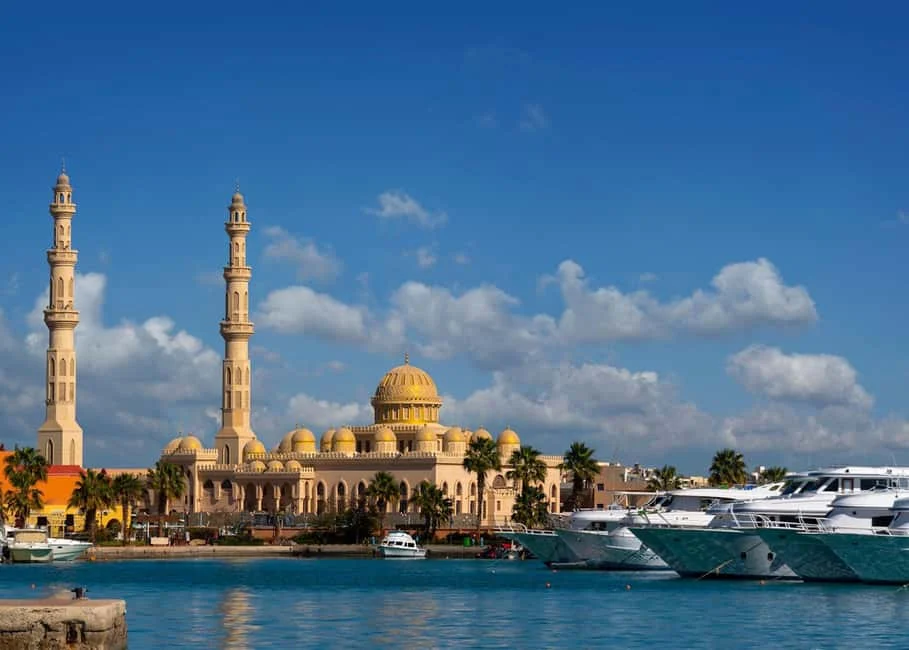
Samadai Reef vs Shaab El Erg
Samadai Reef and Shaab El Erg dominate the conversation for good reason, but they are not interchangeable. Samadai is the more structured site; Shaab El Erg is the more flexible northern Red Sea option.
Samadai Reef near Marsa Alam
Samadai, also called Dolphin House, sits roughly 5 to 7 km offshore from Marsa Alam. It became one of the Red Sea's best-known spinner dolphin resting areas, and management plans introduced zoning to reduce tourist pressure after intensive use in the early 2000s (HEPCA; IWC Whale Watching Handbook).
What matters operationally:
- Managed access with defined use zones
- Stronger ranger and park oversight than most open reefs
- Better known for spinner dolphin resting behavior
- Usually better suited to travelers who value rules and lower-pressure interactions
- Reef itself is also a quality snorkeling and dive site, not just a dolphin stop
Shaab El Erg near Hurghada
Shaab El Erg is the classic Hurghada-area Dolphin House. It is popular because it is reachable for day trips from Hurghada and even more efficiently from El Gouna.
Operational reality:
- Easier from northern resorts
- Strong chance of heavy boat traffic on calm days
- Encounters are more variable because pressure can build quickly
- Excellent for combined snorkeling and wildlife-hope itineraries
- Less suitable for travelers expecting a tightly controlled marine park format
Head-to-head comparison
| Factor | Samadai Reef | Shaab El Erg |
|---|---|---|
| Primary base | Marsa Alam / Port Ghalib | Hurghada / El Gouna |
| Core dolphin type | Spinner dolphins | Often spinner dolphins |
| Access model | Managed zoning | Open commercial trip format |
| One-way boat time | 60–90 min | 55–85 min |
| Typical site feel | More regulated | More variable by boat traffic |
| Reef quality | Strong coral and lagoon structure | Strong reef sections, often paired with extra stops |
| Family suitability | Good if children handle a full boat day | Good from El Gouna and Hurghada due to shorter run |
| Best for photographers | Better when rules and spacing are respected | Better only on uncrowded mornings |
| Best for first-timers | Yes, if expectations are realistic | Yes, especially from Hurghada |
| Best for strict ethics seekers | Stronger choice | Depends heavily on operator discipline |
If your priority is management quality and lower-impact operations, Samadai usually wins. If your priority is easier access from major resorts and lower starting prices, Shaab El Erg is usually the better fit.
Swimming with dolphins vs snorkeling where dolphins may appear vs dolphin watching by boat only
This comparison sets accurate expectations better than most booking pages do.
| Trip format | What it means in practice | Animal-welfare impact | Encounter certainty | Best for | Typical price |
|---|---|---|---|---|---|
| Swimming with dolphins | Marketing phrase; may involve entering water near wild dolphins if conditions and rules allow | Moderate to high if unmanaged; moderate if tightly controlled | Low | Travelers who accept uncertainty | €58 all-in shared |
| Snorkeling where dolphins may appear | Reef snorkeling itinerary with dolphin possibility | Low to moderate | Moderate at known reefs, still not guaranteed | Most travelers | €58–€72 all-in shared |
| Dolphin watching by boat only | Observation from deck or swim platform without entering water near dolphins | Lowest | Moderate | Families, photographers, ethics-first guests | €45–€68 shared |
| Premium small-group observation and snorkel | Fewer guests, guide-led entries only when appropriate | Low | Moderate | Couples, photographers, first-timers wanting quality | €94–€112 |
| Private charter with no-contact policy | Customized route, observation-first, controlled timing | Low to moderate depending on operator | Moderate | Families, content creators, private groups | €420–€980 |
The lowest-conflict wording for responsible operators is usually "snorkeling where dolphins may appear." It is more honest, more durable in reviews, and better aligned with modern wildlife-tourism standards.
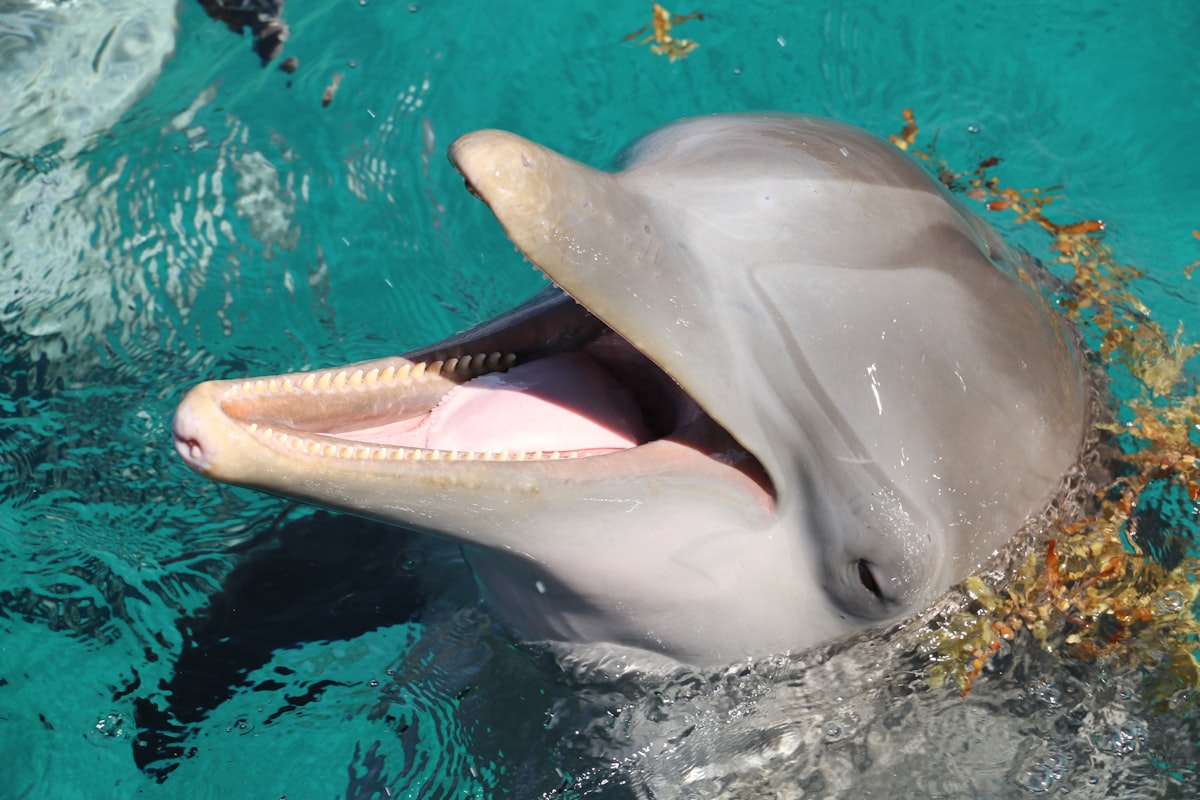
Ethical standards responsible operators should follow
Ethical dolphin tourism is not just a moral issue — it directly shapes what travelers experience. Chased dolphins dive, leave, or become visibly stressed, which means the worst operators often deliver the worst sightings.
Operator ethical standards comparison
| Standard | Lowest-impact format | Moderate-impact format | Highest-impact format |
|---|---|---|---|
| Boat approach | Slow, parallel, 30 m+ stand-off | Slow but closer setup | Fast intercept or repeated repositioning |
| In-water entry | No entry near resting pod | Limited small-group entry | Large simultaneous group drops |
| Touching and feeding | Never | Never | Encouraged or poorly controlled |
| Time with pod | Short, capped observation | Controlled rotation | Repeated prolonged pursuit |
| Resting dolphins | Observation-only | Observation-only when enforced | Swims continue despite rest behavior |
| Group size | 6–10 per guide | 10–16 per guide | 20+ entering together |
| Path blocking | Never | Occasional poor positioning | Common |
| Welfare rating | Lowest impact | Moderate impact | Highest impact |
Recognized guidance from marine-mammal and conservation bodies consistently converges on the same points: do not chase, touch, feed, trap, or provoke dolphins, and do not initiate interaction or try to elicit behavior (HEPCA; NOAA marine-life viewing principles; PADI operator guidance; CMS sustainable whale-watching guidelines).
Rules for ethical wild dolphin encounters
A responsible operator should brief these rules before the boat leaves the marina, not after guests are already in the water.
Core rules that matter
- Minimum boat distance: many responsible briefings use at least 30 m from dolphins before deciding whether any in-water activity is appropriate.
- No chasing: boats should never pursue a pod at speed or repeatedly cut across its direction.
- No touching: direct contact is not ethical and increases stress, injury, and disease risk.
- No blocking travel path: boats and swimmers must never form a wall in front of moving animals.
- No diving down on the pod: sudden bubbles, splashing, and descent behavior can disturb resting or social groups.
- Time limits in water: entries should be short, typically 10 to 15 minutes per rotation.
- Group-size controls: small groups per guide reduce noise and crowding.
- Observation-only during resting periods: many better operators skip swims entirely when dolphins are resting inside lagoons.
Why resting dolphins should often be left alone
Spinner dolphins commonly rest in sheltered areas during the day after night feeding. Disturbing that rest forces additional movement and energy use, which is exactly why managed sites like Samadai developed time-area controls and zoning in the first place (HEPCA; IWC Whale Watching Handbook; Samadai impact studies).

Dolphin species travelers may encounter in Egyptian waters
The Red Sea supports several cetacean species, but only a few are relevant to day-trip expectations. Spinner dolphins are the signature species for reef-lagoon encounters.
Dolphin species relevant to Egypt tours
| Common name | Scientific name | Average group size | Typical habitat | Chance of sighting on tours | In-water interaction ethically recommended |
|---|---|---|---|---|---|
| Spinner dolphin | Stenella longirostris | 20–100 | Sheltered reef lagoons by day, offshore feeding at night | High at Samadai and Shaab El Erg on suitable days | Usually no when resting; limited only under strict controls |
| Common bottlenose dolphin | Tursiops truncatus | 2–20 | Coastal and offshore | Moderate | Not actively pursued |
| Indo-Pacific bottlenose dolphin | Tursiops aduncus | 2–15 | Coastal reef-associated waters | Moderate | Not actively pursued |
| Risso's dolphin | Grampus griseus | 3–30 | Deeper offshore water | Low | No |
| Pantropical spotted dolphin | Stenella attenuata | 20–200 | Offshore pelagic water | Low | No |
| Striped dolphin | Stenella coeruleoalba | 10–100 | Offshore pelagic water | Low | No |
This table reflects the species travelers are most likely to encounter on Red Sea wildlife and dive trips, with spinner dolphins most closely associated with the famous Dolphin House sites in Egypt (IWC Whale Watching Handbook; regional marine-mammal habitat references; operator and dive-site records).
Month-by-month seasonality for dolphin trips
The best months are not only about heat. For dolphin trips, you need a combination of manageable wind, comfortable sea temperature, and surface conditions that allow relaxed snorkeling.
Red Sea dolphin trip seasonality by month
| Month | Avg air temp °C | Avg sea temp °C | Wind pattern | Typical visibility | Crowd level | Comfortable snorkeling probability |
|---|---|---|---|---|---|---|
| January | 21 | 23 | Moderate to fresh N-NW | 20–25 m | Low | 62% |
| February | 22 | 22 | Moderate to fresh N-NW | 20–25 m | Low | 60% |
| March | 25 | 22 | Moderate, changeable | 22–28 m | Low to medium | 71% |
| April | 29 | 23 | Moderate, calmer mornings | 24–30 m | Medium | 82% |
| May | 32 | 25 | Light to moderate | 25–30 m | Medium | 89% |
| June | 35 | 27 | Light to moderate | 25–30 m | Medium | 92% |
| July | 36 | 28 | Light to moderate | 25–30 m | High | 94% |
| August | 37 | 29 | Light to moderate | 25–30 m | High | 95% |
| September | 34 | 28 | Light to moderate | 25–30 m | Medium to high | 93% |
| October | 31 | 27 | Light to moderate | 24–30 m | Medium | 91% |
| November | 27 | 25 | Moderate | 22–28 m | Medium | 84% |
| December | 23 | 24 | Moderate to fresh N-NW | 20–26 m | Medium | 70% |
Sea-temperature patterns align with Hurghada, Marsa Alam, and Sharm El Sheikh monthly Red Sea datasets showing winter water near 22°C to 24°C and summer peaks near 28°C to 30°C depending on hub and month (Egyptian Meteorological Authority; regional sea-temperature datasets).
Best months by traveler type
- Best overall balance: April, May, October, November
- Warm-water lovers: June to September
- Lowest crowd pressure: January, February, March
- Best for children who chill easily: May, June, September, October
- Best for underwater photography: April to June and September to November, when glare and heavy summer traffic are more manageable
What a dolphin trip in Egypt actually costs
Shared tours look cheap until you add fees, gear, and transfer supplements. The most reliable way to compare is line-item pricing.
Trip cost breakdown by departure point and trip style
| Departure point | Trip style | Base trip price | Marine/park fee | Equipment add-ons | Transfer supplement | Total adult example |
|---|---|---|---|---|---|---|
| Hurghada | Budget shared | €45 | €5 | €8 fins and mask | €0 | €58 |
| Hurghada | Premium small-group | €89 | €5 | Included | €0 | €94 |
| El Gouna | Shared | €52 | €5 | €8 fins and mask | €0 | €65 |
| Safaga | Shared | €58 | €5 | €8 fins and mask | €12 | €83 |
| Soma Bay | Shared | €60 | €5 | €8 fins and mask | €12 | €85 |
| Marsa Alam | Shared Samadai | €55 | €7 | €10 fins and mask | €0 | €72 |
| Port Ghalib | Premium Samadai | €96 | €7 | Included | €0 | €103 |
| Sharm El Sheikh | Shared offshore snorkel | €62 | €5 | €8 fins and mask | €0 | €75 |
The extra €12 to €25 often comes from gear, park fees, and long-radius hotel transfers. Travelers who compare only the headline price typically misread the market by 20% to 35%.
Budget, mid-range, and private examples
| Departure point | Budget shared | Mid-range shared or premium | Private charter |
|---|---|---|---|
| Hurghada | €58 | €94 | €420 |
| El Gouna | €65 | €108 | €470 |
| Safaga | €83 | €118 | €560 |
| Soma Bay | €85 | €122 | €590 |
| Marsa Alam | €72 | €103 | €520 |
| Port Ghalib | €74 | €112 | €540 |
| Sharm El Sheikh | €75 | €110 | €980 |
Private charters rise sharply in Sharm because many routes are not true dolphin-focused reef products and marina logistics are pricier. Marsa Alam private pricing remains comparatively efficient for travelers wanting Samadai with a family or photo-focused setup.
Booking guide: what to verify before you book
A well-priced trip can still be poor value if it cuts guide staffing or adds hidden fees. The booking page should answer the following clearly.
Inclusions to verify
- Snorkeling guide ratio: look for 1 guide per 8 to 10 snorkelers, not 1 per 20+
- Life jackets: included and available in child sizes
- Fins and masks: included or charged separately
- Marine park fees: included or exact fee stated
- Hotel transfer radius: exact area included, not just "free transfer"
- Lunch: buffet or boxed, with dietary note if possible
- Soft drinks and water: included all day or only with lunch
- Cancellation cutoff: ideally 24 hours
- Weather cancellation policy: full refund or free date change
Exclusions that commonly surprise travelers
- Long-transfer hotel supplements from Makadi, Safaga, or Soma Bay
- Reef taxes or marine park tickets not bundled in the headline price
- Professional underwater photographer fee
- Private guide surcharge
- Wetsuit rental in winter months
- Infant policy for boat capacity and safety gear
The minimum quality standard for a good booking
- Free cancellation up to 24 hours before departure
- Verified reviews in the hundreds, ideally 500+
- Clear no-guarantee wording for dolphin sightings
- Secure booking with named operator
- Named departure marina and realistic pickup time
- Exact trip duration stated, not "full day" only
Local Insights
Local captains do not find dolphins by luck alone. They read wind direction, overnight swell, current set on the reef edge, and how early the first boats can reach the lagoon before the site becomes noisy. Two things experienced Hurghada-based operators know that most booking pages never mention:
First, the order of stops matters more than most travelers realize. Starting at the dolphin reef first — before 10:30 — adds roughly 15% to 25% to your practical chance of a calm, uncrowded session. Captains who start with a coral stop often arrive at the dolphin site after the window has already weakened. The best encounters happen early because surface chop is lighter, dolphins are more likely to still be settled in resting zones, and boat density is lower.
Second, experienced captains watch reef crowding in real time via radio contact with other boats. If 8 to 12 vessels are already stacked at a dolphin site, the better crews switch the stop order, spend time on a secondary reef, and return later — or shift to observation-only from the boat. Guests on those trips often rate the day higher than guests who arrived at a crowded site and entered the water anyway.
Who should book these trips and who should skip them
These trips are excellent for some travelers and a poor fit for others. Matching the format to the guest matters more than the destination name.
Good fit
- Families with children aged 6+ who can handle 7 to 8 hours out
- First-time snorkelers with life jacket support
- Couples wanting wildlife and reef scenery
- Underwater photographers who value natural behavior over guaranteed proximity
- Reef lovers who will still enjoy the day if dolphins stay distant
Better with caution
- Non-swimmers: fine only with flotation, guide support, and calm conditions
- Pregnant travelers: many can join boat-only or gentle snorkeling formats, but sea motion and ladder re-entry should be assessed conservatively
- Freedivers: should not assume they can dive down on pods; ethical operators often prohibit this near dolphins
- Very young children: boat length, heat, and toilet practicality all matter
Should not book
- Travelers seeking guaranteed touching or selfies with wild dolphins
- Guests uncomfortable with open-water snorkeling
- Anyone expecting a 100% sighting guarantee
- Travelers who want a 2-hour activity rather than an 8-hour sea day
Marine protection and responsible tourism context
Egypt's southern Red Sea sites became case studies in dolphin-tourism management because uncontrolled pressure caused measurable concern. Samadai in particular is widely cited for introducing zoning and controlled-use approaches to protect spinner dolphins while still allowing tourism revenue, with input and documentation from HEPCA and international conservation bodies (HEPCA; IWC Whale Watching Handbook; Samadai economic and management studies).
This matters for booking because access rules can change. Local enforcement, marine park instructions, weather, and seasonal management decisions may affect whether in-water entries are allowed, where mooring is permitted, and how many groups can enter during a given window.
For travelers, the simplest rule is this: choose operators whose sales copy leaves room for non-entry decisions. If a company promises close swimming regardless of conditions, that is a warning sign rather than a benefit.
Comparison of the main Red Sea bases
Each Red Sea base serves a different type of traveler. The best one is the one that minimizes transfers and aligns with your expectations.
Hurghada
Best for value and availability. It has the widest range of snorkeling tours in Hurghada, easiest hotel access, and the strongest budget market.
El Gouna
Best for shorter boat time to northern dolphin areas. Higher hotel rates, but often better logistics for families and premium guests.
Safaga and Soma Bay
Best for resort travelers who do not want to relocate. Expect longer pickups or transfer supplements unless the operator runs a direct local departure.
Marsa Alam and Port Ghalib
Best for travelers who care most about Samadai and a more protection-focused dolphin day. Also strong for reef quality and generally warmer winter water than northern hubs.
Sharm El Sheikh
Best for reef snorkeling overall, not specifically for dolphin-focused day trips. Dolphins are possible on diving excursions from Hurghada and the northern Red Sea, but Sharm is not the strongest base for a dedicated ethical dolphin itinerary.
How to choose the right dolphin trip
Book by trip design, not by the biggest promise. The strongest product pages are usually the most restrained in their wording.
Choose shared budget if:
- Price matters most
- You are comfortable with bigger groups
- You care more about a good sea day than premium service
- You want lower crowd density
- You value guide attention and calmer entries
- You are traveling as a couple, with children, or with camera gear
- You are 4 to 8 people
- You want observation-first pacing
- You need flexible stop order or family-friendly timing
The bottom line
For most travelers, the best version of swimming with dolphins in Egypt is an ethical Red Sea boat trip where snorkeling, reef quality, and wildlife observation matter as much as the dolphins themselves. Marsa Alam's Samadai Reef is the strongest choice for regulated, conservation-aware encounters, while Hurghada and El Gouna offer the best-value access to Shaab El Erg.
The trips worth booking are the ones that set honest expectations, cap group pressure, and put the animals first. That approach consistently produces calmer entries, better reef time, stronger reviews, and a wild encounter that still feels genuinely wild.
Sources
- HEPCA (Hurghada Environmental Protection and Conservation Association) — Samadai Reef management framework, dolphin-tourism guidelines, and Red Sea marine-park zoning documentation. hepca.org
- IWC Whale Watching Handbook (2025 edition) — Species behavior, ethical encounter standards, and site-specific guidance for spinner dolphins in the Red Sea. iwc.int
- PADI — Dive-site and marine-life interaction guidelines relevant to dolphin encounters on snorkeling and dive excursions. padi.com
- Egyptian Tourism Authority — Official tourism and marine-excursion licensing framework for Red Sea operators. egypt.travel
- Convention on Migratory Species (CMS) — Sustainable whale-watching and dolphin-encounter guidelines referenced by Red Sea conservation bodies. cms.int
- NOAA Marine Life Viewing Guidelines — Internationally recognized principles for non-disruptive wildlife observation at sea, applied by responsible Red Sea operators. fisheries.noaa.gov
- Dolphin Watch Alliance — Ethical standards and operator certification criteria for wild dolphin tourism. dolphinwatchalliance.org
- Egyptian Meteorological Authority — Monthly sea-temperature and wind-pattern data for Hurghada, Marsa Alam, and Sharm El Sheikh. ema.gov.eg


