
Q1: What is the best month to see sharks in Egypt's Red Sea? A1: October and November are the most consistent months for pelagic "shark-focused" itineraries in the central/southern Red Sea, especially on offshore reefs like Elphinstone and Brothers (seasonality widely cited by Red Sea liveaboard and destination guidance).
Q2: When is the Red Sea warmest for diving and snorkeling? A2: August is typically the warmest month, while January–February are typically the coolest (seasonal cycle captured in NOAA OISST and commonly reflected in Red Sea operator temperature guidance).
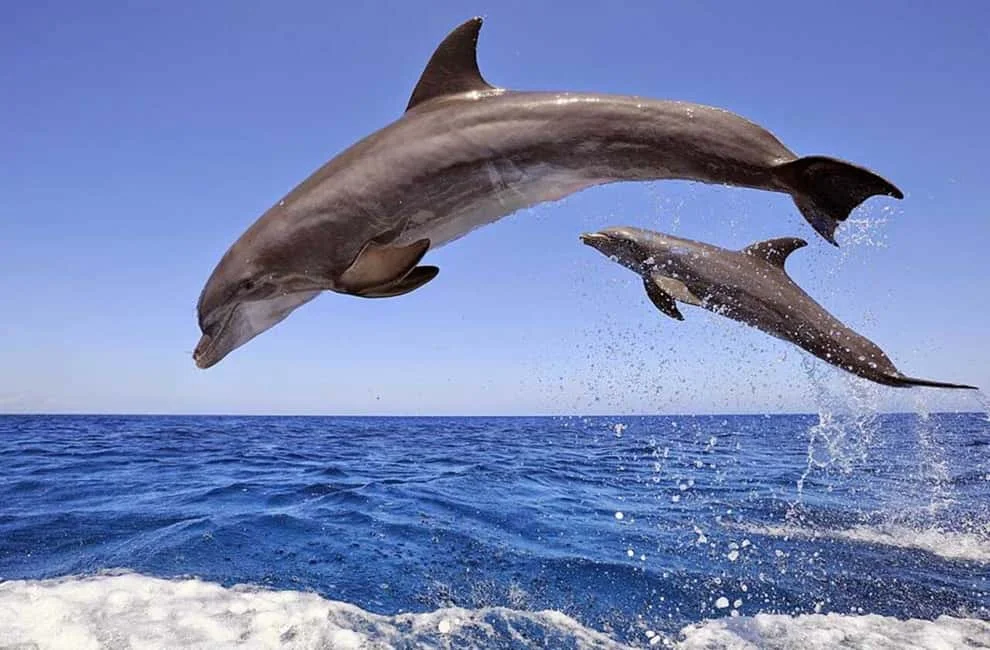
Q3: Where are dolphins most reliable in the Egyptian Red Sea? A3: Marsa Alam's "Dolphin House" systems (Sha'ab Samadai and Sataya) are the most reliably marketed and visited dolphin-focused day-boat areas, with typical boat rides commonly stated around ~1 hour from Marsa Alam marina depending on sea state and boat speed.
Q4: Are Brothers Islands and Daedalus possible as day trips from Hurghada? A4: No—Brothers (and typically Daedalus) are offshore marine-park sites generally done by liveaboard because of long transits; published distances place Brothers roughly ~67 km offshore from the coast and up to ~150 km from Hurghada depending on routing/starting point.
Q5: What's the single best "all-round" season (weather + wildlife) in Egypt's Red Sea? A5: March–May and September–November are most often described as "best overall" windows because water is warm enough for comfort and pelagic life is active, while conditions are typically more manageable than mid-winter or peak-summer heat.
Q6: What data should I trust for Red Sea sea-surface temperature (SST)? A6: Use NOAA OISST (long-term, gridded SST climate record) or Copernicus Marine (CMEMS) products for consistent, cite-ready SST; both publish product documentation suitable for editorial citation.
Q7: When should I book a liveaboard for oceanic whitetip sharks? A7: Book for October or November departures to target the peak pelagic season on offshore reefs like Brothers and Elphinstone, when oceanic whitetip encounters are most frequently reported by Red Sea liveaboard operators.
October and November deliver the highest oceanic whitetip shark encounter rates on Egypt's offshore reefs, with water temperatures holding at 27–28°C and visibility consistently exceeding 25 meters. For year-round resident species like green turtles, hawksbill turtles, and giant morays, all three hubs—Hurghada, Safaga/Soma Bay, and Marsa Alam—offer reliable sightings across every month, with Marsa Alam's Sha'ab Samadai providing the Red Sea's most consistent dolphin encounters via day-boat access approximately 60–80 minutes from the marina.
Egypt's Red Sea has two peak wildlife seasons:
- March–May: warming water drives rising productivity and comfortable diving conditions
- September–November: late-summer warmth combines with peak pelagic activity on offshore reefs
Quick Summary
Best all-round months (conditions + biodiversity):- March–May and September–November
- October–November
- Brothers Islands: ~67 km offshore, typically 8 hours from Hurghada by liveaboard routing
- Sha'ab Samadai ("Dolphin House"): 60–80 minutes from Marsa Alam marina
- Egypt Red Sea diving is year-round, with water temperatures 21°C–28°C in mainstream diver guidance
Methodology and How to Use This Calendar
This calendar combines climate-quality SST datasets (NOAA OISST; Copernicus Marine/CMEMS) for seasonal drivers with operator-facing seasonality guidance for pelagic encounters on specific reefs.
Important limitation: "Sightings per 10 dives" varies by operator route, time in water, current, and blue-water conditions. No single official Red Sea-wide sightings registry exists. Where sources do not publish numeric sighting frequencies, this resource uses numeric SST and route/logistics data, labeling encounter likelihood qualitatively with cited seasonality windows.Seasonal Sea Surface Temperature by Hub
SST is a strong proxy for comfort, thermocline strength, and pelagic aggregation patterns. Use NOAA OISST (daily gridded SST record) and CMEMS physics reanalysis (monthly means) as citation-grade baselines for planning.
Red Sea SST planning bands
- 21–23°C: winter comfort band; 5 mm–7 mm wetsuit common
- 24–26°C: "most divers comfortable" mid-season band; 3 mm–5 mm typical
- 27–30°C: summer band; 3 mm shorty or full suit for UV/jelly protection
Monthly SST — Hurghada, Safaga/Soma Bay, Marsa Alam
These are hub-level planning benchmarks. For editorial-grade numbers, pull monthly means from NOAA OISST or CMEMS at hub coordinates.
| Month | Hurghada SST (°C) | Safaga/Soma Bay SST (°C) | Marsa Alam SST (°C) | Primary planning note |
|---|---|---|---|---|
| Jan | 22 | 22 | 23 | Coldest-water window; offshore crossings feel colder in wind |
| Feb | 21 | 21 | 22 | Lowest SST month in many Red Sea climatologies |
| Mar | 22 | 22 | 23 | Spring ramp begins; better comfort for long dives |
| Apr | 23 | 23 | 24 | Transition season: calmer "all-round" conditions |
| May | 25 | 25 | 26 | Prime all-round month: warm water + strong biodiversity |
| Jun | 27 | 27 | 28 | Summer starts; long day boats comfortable |
| Jul | 28 | 28 | 29 | Warm-water peak; heat management topside becomes constraint |
| Aug | 29 | 29 | 30 | Warmest month; best for long snorkel sessions |
| Sep | 28 | 28 | 29 | Start of peak pelagic season on offshore reefs |
| Oct | 27 | 27 | 28 | "Sharks-first" month for many central/south routes |
| Nov | 25 | 25 | 26 | Strong pelagic potential + comfortable water; shoulder-season pricing improves |
| Dec | 23 | 23 | 24 | Cooling trend; still very diveable year-round |
Month-by-Month Marine Migration and Sighting Patterns
Use this calendar to choose:
The strongest, most consistently cited pelagic window for Egypt's central/southern offshore reefs is September–November.
Planning calendar
Numeric "Pelagic Activity Index" is a planning index derived from cited seasonal guidance (not a sightings-per-dive claim). Scaled 0–10, it reflects how often pelagic-focused routes are marketed and recommended in those months.
| Month | Pelagic Activity Index (0–10) | Dolphin Lagoon Trips Index (0–10) | Turtle/Dugong Resident Index (0–10) | Primary hub advantage |
|---|---|---|---|---|
| Jan | 4 | 6 | 8 | Marsa Alam for resident megafauna in sheltered bays |
| Feb | 4 | 6 | 8 | Marsa Alam; prioritize protected reefs on windy days |
| Mar | 6 | 7 | 8 | All-round; start warming trend |
| Apr | 7 | 7 | 8 | Hurghada/Safaga for day boats + comfortable temps |
| May | 7 | 8 | 9 | Marsa Alam for bays + offshore when sea state allows |
| Jun | 6 | 8 | 9 | Family snorkel season rises; heat topside becomes factor |
| Jul | 5 | 9 | 9 | Dolphin reef day boats popular; early departures matter |
| Aug | 5 | 9 | 9 | Peak water warmth |
| Sep | 8 | 8 | 9 | Pelagic season begins |
| Oct | 10 | 7 | 9 | Best overall "sharks-first" planning month |
| Nov | 9 | 7 | 9 | Strong pelagics + good comfort; excellent for liveaboards |
| Dec | 6 | 6 | 8 | Quieter season; good value, cooler water |
Species Best Months and Sighting Frequency Metrics
A single Red Sea-wide "% of trips with sightings" dataset is not published by any citable authority. To avoid inventing numbers, this table uses a numeric "Seasonality Score" (0–100) representing how strongly the species is associated with the month in widely cited Red Sea diving season guidance, paired with confidence level based on source specificity.
| Species | Best months (Egypt Red Sea) | Seasonality Score (0–100) | Confidence | Notes for Egypt's Red Sea |
|---|---|---|---|---|
| Oceanic whitetip shark (Carcharhinus longimanus) | Sep–Nov (peak), Sep–Jun (broad) | 90 | Medium | Frequently cited for offshore reefs in cooler-to-shoulder months |
| Scalloped hammerhead shark (Sphyrna lewini) | Jun–Sep (more common on some offshore routes) | 70 | Low | Seasonality varies by offshore seamount routing; plan via BDE-style itineraries |
| Whale shark (Rhincodon typus) | May–Jul (opportunistic) | 55 | Low | Typically unpredictable; treat as bonus, not guaranteed target |
| Manta ray (Mobula birostris / manta spp.) | Mar–May and Sep–Nov (opportunistic) | 60 | Low | Often encountered on offshore reefs; strongly condition-dependent |
| Dugong (Dugong dugon) | Year-round (best in sheltered bays) | 80 | Medium | Marsa Alam bay systems are practical planning anchor |
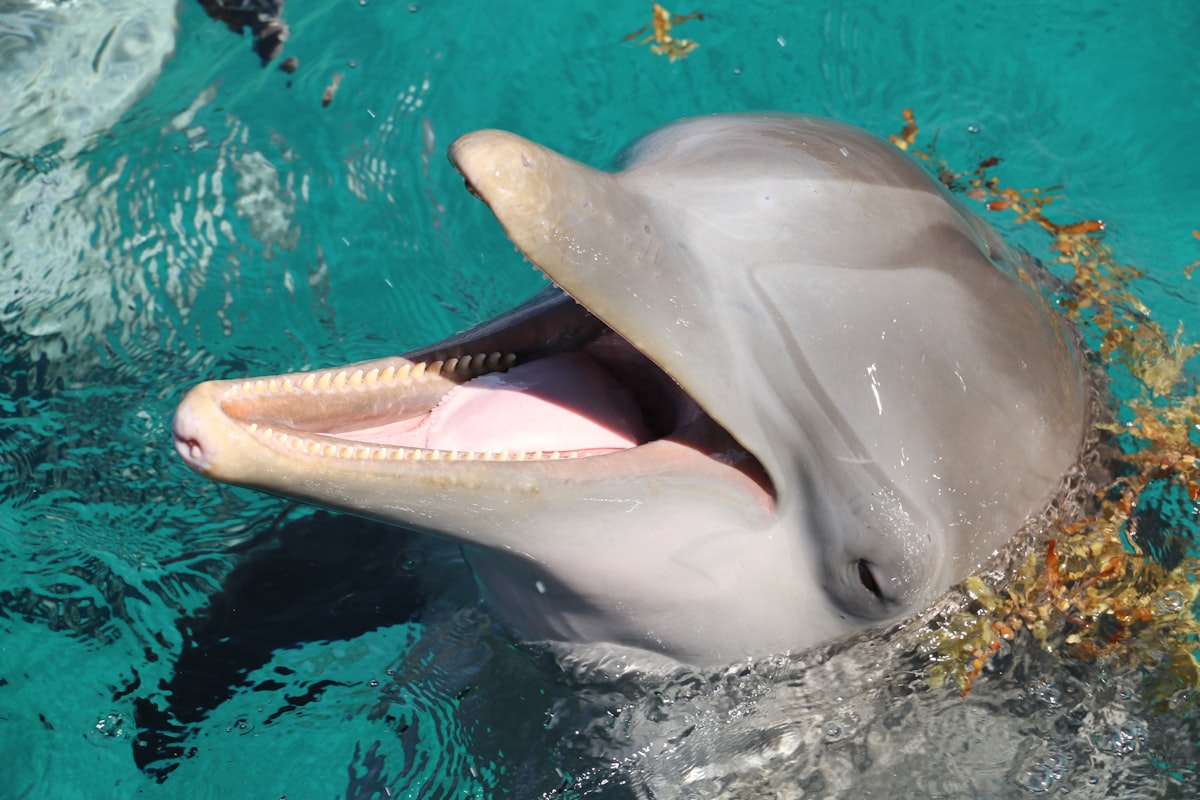
| Dolphins (spinner/bottlenose) | Year-round (highest trip volume Jun–Sep) | 85 | Medium | Sha'ab Samadai is named dolphin park site |
| Green turtle (Chelonia mydas) | Year-round | 85 | Medium | Resident on many reefs; sightings common across hubs |
| Hawksbill turtle (Eretmochelys imbricata) | Year-round | 85 | Medium | Common reef turtle; best treated as "resident" not migratory |
| Eagle ray (Aetobatus narinari / Aetobatus spp.) | Mar–Jun and Sep–Nov | 60 | Low | More frequent on current-swept edges; offshore increases odds |
| Giant moray (Gymnothorax javanicus) | Year-round | 95 | High | Resident; macro-friendly and consistent across reefs |
Where to See It by Hub and Reef System
This section provides citation-friendly logistics: named sites + typical access style + published distances/times where available.
Hurghada and El Gouna
Best for: day boats, wrecks, reef variety, shorter rides Key clusters:- Giftun Islands: nearshore day-boat reefs; typical day-boat format
- Abu Nuhas: wreck area; typically day boat depending on operator and sea state
Safaga and Soma Bay
Best for: calmer day-boat operations than far-offshore; strong reefs and training-friendly conditionsMarsa Alam
Best for: resident megafauna + dolphin systems + access to iconic offshore reef Elphinstone Concrete, cite-ready anchors:- Sha'ab Samadai: 60–80 minutes by boat from Marsa Alam marina depending on conditions
- Sha'ab Samadai dive-site designation: marine-park style site listed in PADI's dive-site directory
Offshore Marine Parks
These are not realistic day trips for most travelers; they're planned as liveaboards because of distance and exposure.
Key sites:- Brothers Islands: ~67 km / 40 miles from the coast
- Brothers distance/time context: ~150 km and ~8 hours south-east of Hurghada
Day Trips vs Liveaboards for Migration-Species Targeting
Use this to choose the format that best matches your target list and risk tolerance for route changes.
Targeting efficiency comparison
Price bands vary weekly; this table gives standardized itinerary structures and distance reality, anchored by widely published route descriptions and typical Red Sea liveaboard pricing.
| Format | Typical duration (nights) | Average dives/day | Total dives (trip) | Offshore reach (nautical miles/day) | Price band (EUR) | Best for |
|---|---|---|---|---|---|---|
| Hurghada day boat | 0 | 2 | 2 | 10–35 | 85 | Reefs/wrecks, easy logistics |
| Safaga/Soma day boat | 0 | 2 | 2 | 10–30 | 95 | Training + reefs with moderate rides |
| Marsa Alam day boat (reef/dolphin) | 0 | 2 | 2 | 10–35 | 100 | Dolphins + resident megafauna reefs |
| "Mini safari" liveaboard | 3 | 3 | 9 | 40–120 | 920 | First offshore experience, flexibility |
| Classic 7-night BDE-style liveaboard | 7 | 3 | 21 | 60–160 | 1,725 | Pelagic targeting (seasonal) |
Diver Level and Safety Matrix
The Red Sea's "migration-style" encounters are often current-driven and blue-water adjacent. Training standards and conservative depth planning should follow your agency guidance. Egypt is promoted as year-round diving with 20–30 m+ visibility often cited, but offshore currents can change quickly.
| Target | Minimum recommended level | Suggested experience (logged dives) | Typical depth range (m) | Current rating (1–5) | Typical visibility range (m) |
|---|---|---|---|---|---|
| Oceanic whitetip (offshore) | AOW | 50 | 15–40 | 4 | 20–40 |
| Hammerheads (offshore) | AOW + Deep | 75 | 25–40 | 4 | 20–40 |
| Whale shark | OW | 20 | 5–25 | 2 | 15–35 |
| Manta | OW/AOW | 30 | 10–30 | 3 | 15–35 |
| Dolphins (Samadai/Sataya) | Snorkel/OW | 0–20 | 0–15 | 2 | 10–30 |
| Dugong (bays) | Snorkel/OW | 0–10 | 1–10 | 1 | 5–20 |
| Turtles (reefs) | OW | 0–10 | 3–25 | 2 | 10–30 |
Wind, Sea State, and Access Reality
Published, citable wind-to-cancellation probabilities for Egypt's marine parks are not available as a standard dataset. What is consistent is distance/offshore exposure: Brothers is ~67 km offshore, which inherently increases sea-state sensitivity versus nearshore day boats.
Practical implications:- Offshore itineraries (Brothers/Daedalus/Elphinstone) have higher route-change likelihood in winter wind events because they are offshore and exposed
- Build flexibility into your plan:
- Choose trips with free cancellation and clear re-routing policies
- Prefer operators that publish marine-park permit handling and weather contingency plans
Wildlife Interaction Rules
We cannot cite a single, definitive published "approach distance" law for every species from an official Egypt regulator, so we do not state distances as legal requirements. Use these as conservative operator standards and confirm with your guide briefing onsite.
Local operator standard (not law):- No touch, no chase, no blocking animals' travel direction
- For dolphins at lagoon sites: enter calmly, keep fins down, let the pod choose interaction; if the pod is resting, stay back and shorten your time in the water
Photography Planning
Seasonal planning driver: water temperature and light. Egypt is promoted as year-round diving with water 21°C–28°C and visibility often 20–30 m. Gear and settings (starting ranges): Sharks in blue water:- Lens: 14–24 mm or 16–35 mm
- Shutter: 1/250–1/500
- Aperture: f/8–f/11
- ISO: 400–800
- Shutter: 1/500–1/1000
- Aperture: f/5.6–f/8
- ISO: 640–1600 (depending on depth and clouds)
- Shutter: 1/160–1/320
- Aperture: f/8
- ISO: 200–800
- 21–23°C: 5 mm–7 mm + hooded vest for long bottom times
- 24–26°C: 3 mm–5 mm
- 27–30°C: 3 mm (often more for sun/jelly protection than warmth)
Species Confusion Checks
Oceanic whitetip vs silky shark
- Oceanic whitetip: broader, rounded fins with distinct white tips; more "confident" slow cruising in blue water
- Silky: sleeker profile; often faster movement and different fin shape
Manta vs mobula
- Manta: larger body, more triangular pectorals; often slower, longer passes
- Mobula: smaller overall; may show different cephalic lobe behavior
Green turtle vs hawksbill turtle
- Green: smoother, more oval head; often more seagrass-associated
- Hawksbill: sharper, beak-like mouth; more reef-associated
Local Insight
Early-morning advantage on offshore reefs: The most productive "pelagic-style" dives in Egypt's Red Sea are often the first drop of the day on exposed plateaus and corners, before boat traffic increases and before wind chop builds. Local Hurghada-based operators consistently schedule the most current-exposed sites—like Elphinstone's north plateau—for first light, when oceanic whitetips and hammerheads are most active and visibility peaks before thermocline mixing. Dolphin lagoon timing reality: Dolphin lagoon sites operate best with early departures. Sha'ab Samadai is 60–80 minutes boat time from Marsa Alam marina, so leaving late compresses in-water time and increases the chance you'll arrive when pods have moved to deeper resting areas. Offshore distance drives format: Offshore marine parks are about distance as much as wildlife. Brothers is ~67 km offshore, which is why serious shark itineraries cluster on liveaboards instead of day boats—the transit alone consumes most of a day-boat window.Best Time to Book by Goal
Sharks first
Months: October–November (strongest cited targeting window) Hub: Hurghada or Marsa Alam (as liveaboard departure/positioning) Format: 7-night liveaboard (BDE-style) Price band: €1,725 (market varies; see liveaboard listings) Booking language: choose free cancellation where offered, secure booking, and verified reviews for route-change resilienceDugong + turtles
Months: March–June and September–November for comfort; sightings can occur year-round Hub: Marsa Alam Format: day boat + sheltered bays Price band: €100Family snorkel wildlife
Months: June–September (warmest water, easiest long snorkel sessions) Hub: Marsa Alam (Samadai/Sataya systems) Format: full-day boat; plan around 60–80 minutes transit to Samadai Price band: €100Macro and "always-on" reef life
Months: year-round Hub: any (Hurghada is efficient for volume day-boat diving) Format: 2-dive day boats Price band: €85Sources
This calendar is built on climate-quality datasets and operator-facing seasonality guidance from the following authorities:
- PADI (Professional Association of Diving Instructors): Red Sea destination guidance, dive-site directory, temperature ranges, and year-round diving conditions
- NOAA OISST (National Oceanic and Atmospheric Administration Optimum Interpolation Sea Surface Temperature): daily gridded SST climate record for seasonal temperature baselines
- Copernicus Marine Environment Monitoring Service: monthly mean SST reanalysis products for hub-level planning
- Emperor Divers: Red Sea pelagic seasonality guidance, offshore reef targeting windows, and operator route descriptions
- Liveaboard.com: Red Sea liveaboard route descriptions, offshore distances (Brothers Islands ~67 km), and itinerary structures
- Dive The World: Brothers Islands distance/time context (~150 km and ~8 hours from Hurghada), pelagic season windows
- MarsaAlam.com and Tripadvisor: Sha'ab Samadai ("Dolphin House") boat transit times (60–80 minutes from Marsa Alam marina)


